
The design of bathroom vanity units can add greatly to the room’s décor with a surprising range of options. The aim of this article is to explain the benefits of a well-designed vanity unit and how to choose one wisely.
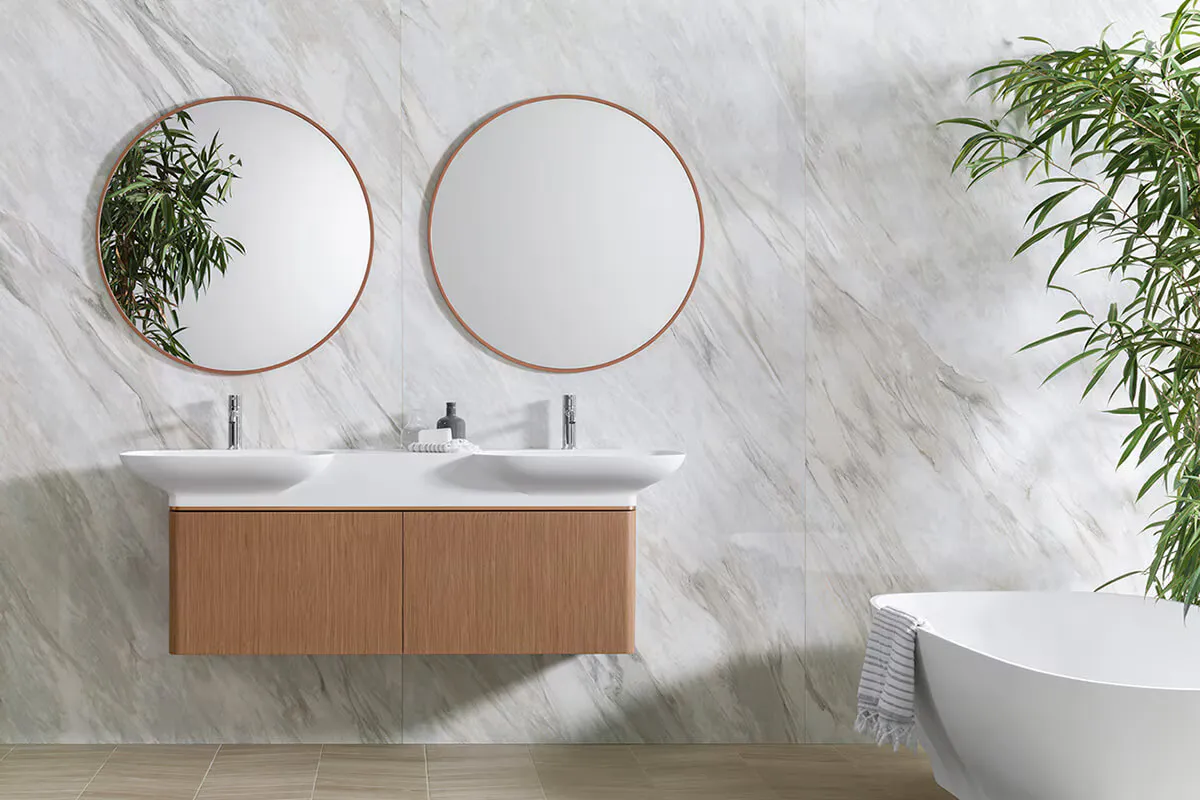
The design of bathroom vanity units can add greatly to the room’s décor with a surprising range of options. The aim of this article is to explain the benefits of a well-designed vanity unit and how to choose one wisely.
We will look at the most appropriate materials for both the Wash Hand Basin and supporting cabinet or cupboard, vanity unit structures and decorative styles.
Our step-by-step guide includes all the information you need to add a valuable, attractive and useful piece of furniture to your bathroom.
Pure Bathroom vanity unit 130X37.5 cm
After the shower (or bath), the vanity unit takes up most space in the bathroom and is the most conspicuous installation. Because of this visibility, the choice of design contributes greatly to the overall décor of your bathroom. The size and materials can make a statement as well as contribute to the practical functioning of the bathroom.
The two parts of the vanity unit, basin and storage, are separate and fulfil different functions. Therefore, the materials and forms of these two elements should be considered separately. But they do depend on one another and there is a symbiotic relationship between both. The main criteria that you must consider for choosing bathroom vanity units include the following:
1.0 Scale & Dimensions: The size and dimension of the vanity unity within the bathroom must not interfere with door swings, other fittings and the general circulation. Avoid overpowering the space with a too-big bathroom vanity unit. And, similarly, don’t skimp on the vanity unit in a larger bathroom layout.
2.0 Materials: Typically, there are two separate, but complementary materials involved. One for the basin which must be moisture-proof and the other for the cabinet which is more decorative. Although there should be a dialogue between them.
3.0 Structure: Bathroom vanity cabinets are either supported off the floor or the wall. Floor-standing vanity units with a basin look solid and are attached to walls for stability. Wall-hung vanity units add a lighter aesthetic and can make the bathroom more spacious.
4.0 Colour & Design: There is a world of options that will help you add to the overall design you are after. Traditional Victorian, cutting-edge contemporary, industrial or minimalist; your decision depends on the overall look you want to create.
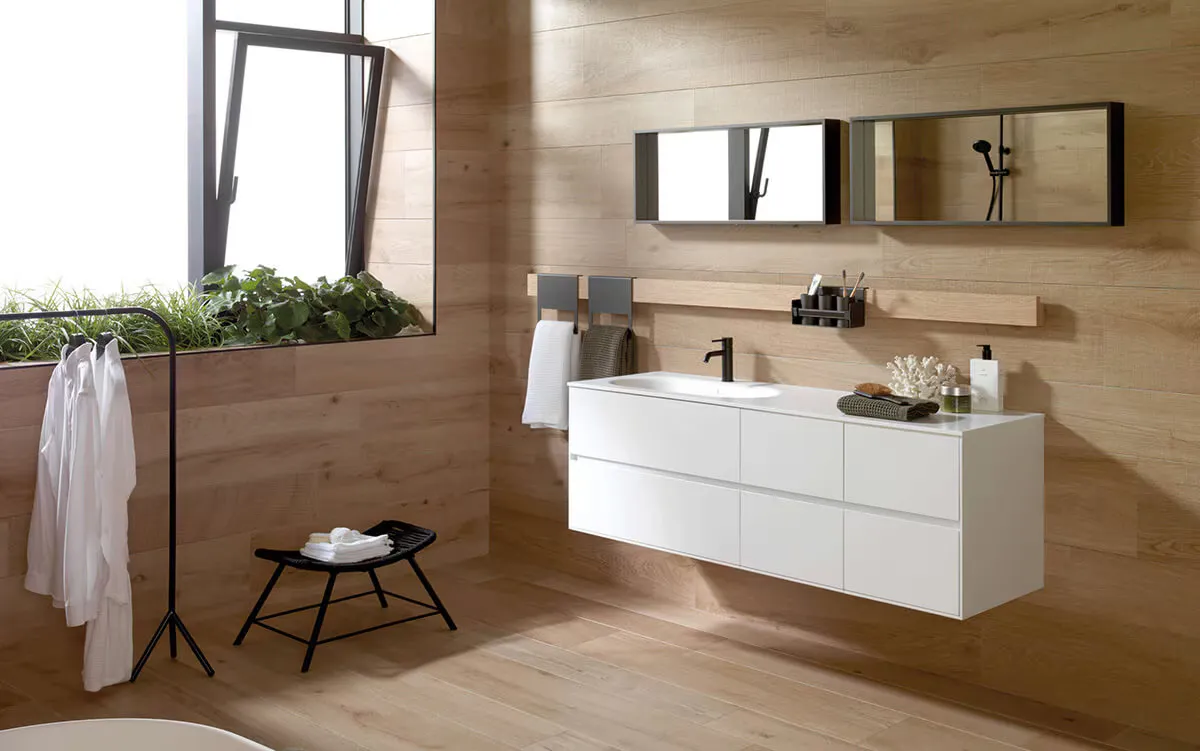
UP Snow Mate 160 cm
Draw a rough layout of your bathroom space to scale on graph paper using a pencil, and then measure the walls with a measuring tape and draw over the lines in pen to scale. An appropriate scale is 1:20, so a wall measuring 2 metres in length will measure 10 cm on your graph paper. Mark the positions and measurements of the bathroom door, windows (if any), WC pan and other installations.
This allows us to accurately decide on the optimum position for the bathroom vanity unit. Even if it’s only a rough idea we now know where the vanity unit can be located with regards to the plumbing, if a double vanity will fit or not. And, where we need to bring an electrical outlet for mirror lighting and shaving sockets.

STAGE Roble Tortola Roble Bronce
The most obvious and first decision is whether you prefer a single or double vanity unit. A small bathroom can accommodate a double vanity, the choice might be more about the style or the number of users. A double unit can look elegant and generous in the space, alternatively, you can pair two single bathroom vanity units to create the same effect.
The length of the vanity depends on the space available. While a single vanity unit measures between 46 and 106 cm in length, and up to 152 cm, a double vanity unit measures anywhere between 122 and 182 cm in length.
The recommended countertop height off the bathroom floor is between 760 and 815 mm which is comfortable for most users. There is a current trend towards taller units, up to 915 mm, which mirrors the typical height of a kitchen worktop. You should allow for between 508 and 533 mm in depth from the wall outwards.
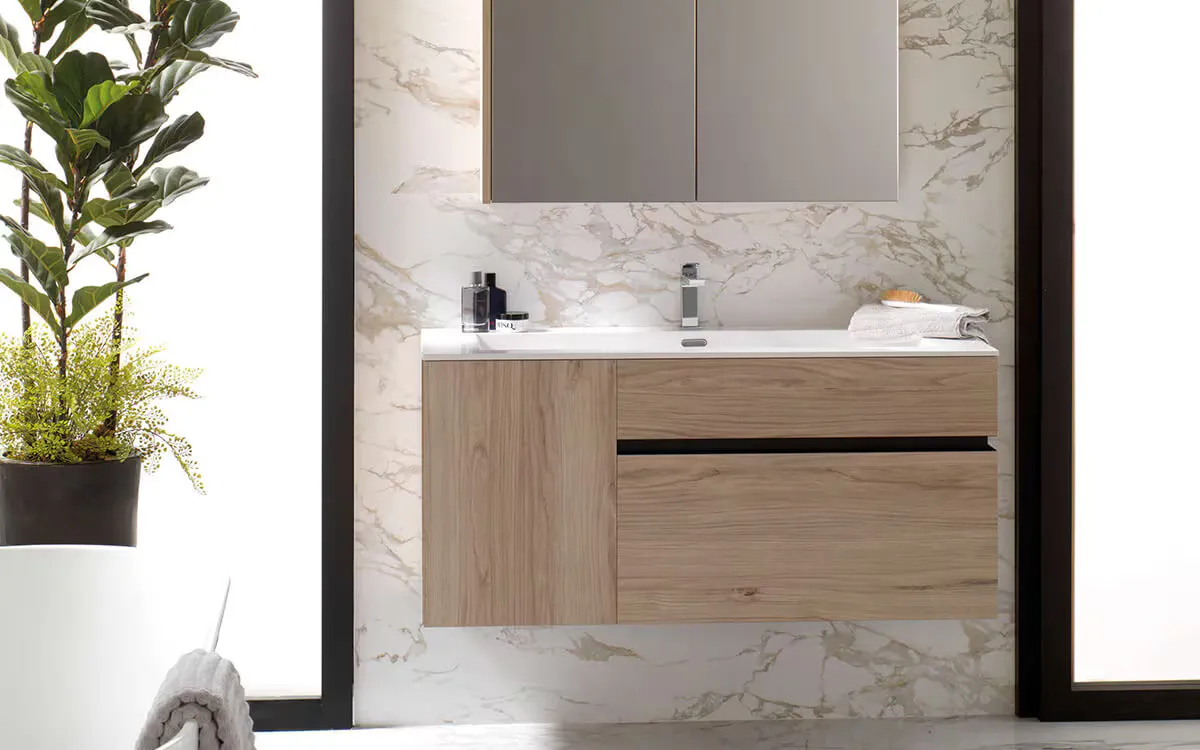
Corner Nogal Frost 120 cm
The sink or washbasin can be designed as a continuous surface forming the countertop or, alternatively, can be combined with other materials. Solid-surface KrionTM for example is a non-porous anti-bacterial finish, warm to the touch that can be formed into a countertop with an inset sink. Similarly, ceramic sinks can be formed to create a continuous countertop. Alternatively, the sink and countertop can be made from different materials.
The most common materials for washbasins include ceramic, porcelain, glass, stainless steel metal and resin. Ceramic is the most popular choice for bathroom vanity units in the UK thanks to its water-proof properties, affordable cost and easy maintenance.
The countertop provides a flat shelf and a useful surface to store toiletries and other items. It extends the washbasin to one, or both sides and adds an attractive materiality and character to the vanity unit. The choice of countertop material can identically match, complement or contrast with the washbasin.
01. Ceramic: extremely durable and easy to maintain, comes in a huge range of design choices and colours. Ceramic matches other bathroom artefacts and looks good in any style space.
02. Glass: stylish and sophisticated with a sleek modern aesthetic. Glass is exceptionally stain-resistant but can shatter and needs non-abrasive cleaning products to maintain in pristine condition.
03. Stone: classic and elegant stone countertops such as marble and granite create a timeless quality. Some stone options require sealing and ongoing maintenance but stone looks great when paired with a ceramic sink and timber base.
04. Wood: the organic qualities of wood are unrivalled, and wood is surprisingly good as a countertop as long as it’s sealed and treated. The timber aesthetic can be traditional or modern depending on the base.
05. Solid surface: including high-tech materials like KrionTM, reconstituted stone, acrylic and resin. The easiest option to install and budget-friendly.
And finally, the last material to consider is the base cabinet or cupboard. Typically, these are made of solid wood, veneered timber, plywood or MDF. Timber is a strong and lightweight material that is endlessly versatile. Cupboard doors add a clean silhouette to bathroom vanity units and hide stored items. Opening pull handles can be recessed into the door’s surface, form a bottom edge detail or be dispensed with via a push mechanism.

Washbasin Lounge 60s45 cm
Wall-hung vanity unit Lounge Espiga 96 cm
There are three options when it comes to the type of sink. They provide very different aesthetics, one of which will be the right one for the look you are trying to create. The choice also has an impact on the depth of the sink which can be an important consideration with regard to how you use your washbasin. The plumbing of these sinks also varies.
01. Drop-in Sink: The edge of the sink sits on top of the counter. Standard sizes are wide and shallow enough to fit into any choice of base cabinets. The junction between the edge of the sink and the countertop can be a dirt trap.
02. Undermount or Semi-Recessed Sink: Installed under the counter and therefore much easier to clean. There are no exposed edges and so the countertop also looks cleaner.
03. Vanity Basins or Countertop Sink: The washbasin looks like a bowl sitting on top of the countertop. The basin is typically deeper and requires a special tap fitting. The look however is stylish and eye-catching.
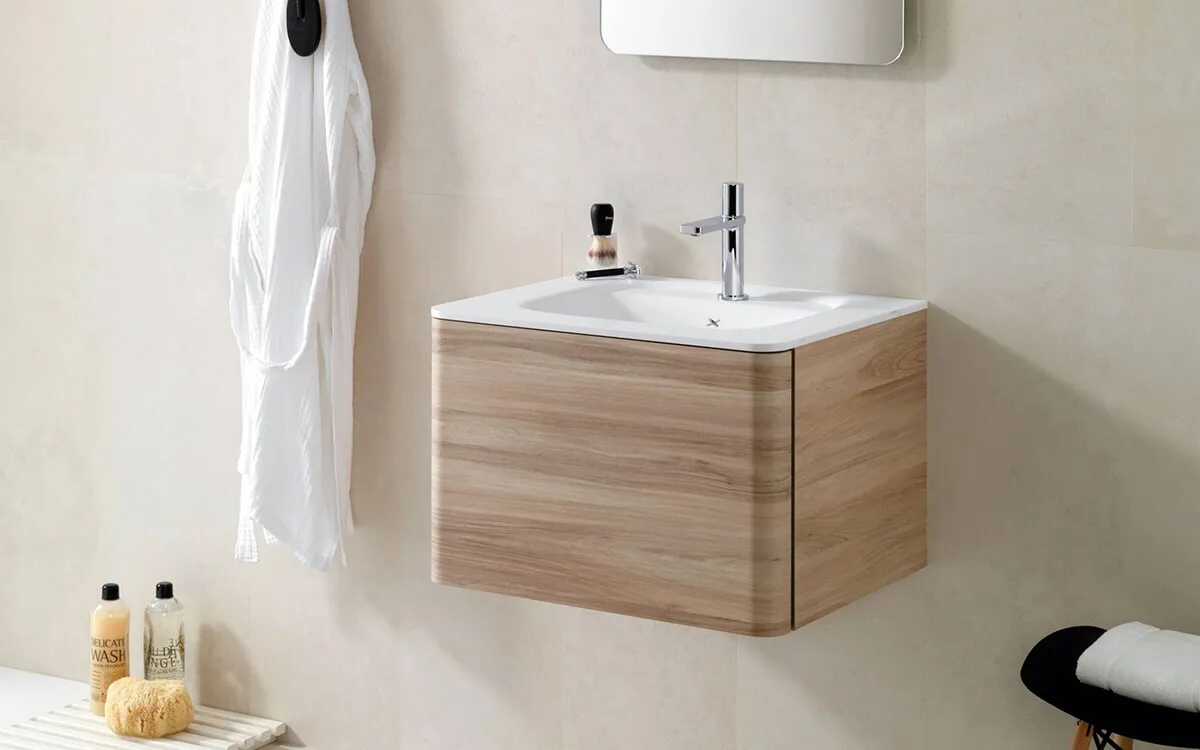
Bathroom vanity unit Radio
The choice of taps adds another dimension to the sculptural qualities of bathroom vanity units. The standard style of taps includes single lever (with integrated mixer), widespread (with separate controls for hot and cold within a single spout) and separate hot and cold taps. Although the latter is uncommon nowadays in UK bathrooms. These bathroom washbasin taps are further categorised by their relationship to the vanity unit.
01. Countertop mounted: where the sink does not have an integrated opening to accommodate the tap or taps. Recommended for vessel-type sinks which require a comfortable distance above the sink to work correctly.
02. Sink mounted: most commonly found in UK bathrooms. The basin integrates the opening for the tap or taps.
03. Wall mounted: where the tap or taps are plumbed directly into the wall and spill over the basin. The dimensions of the taps must be carefully considered. The look is clean and uncluttered.
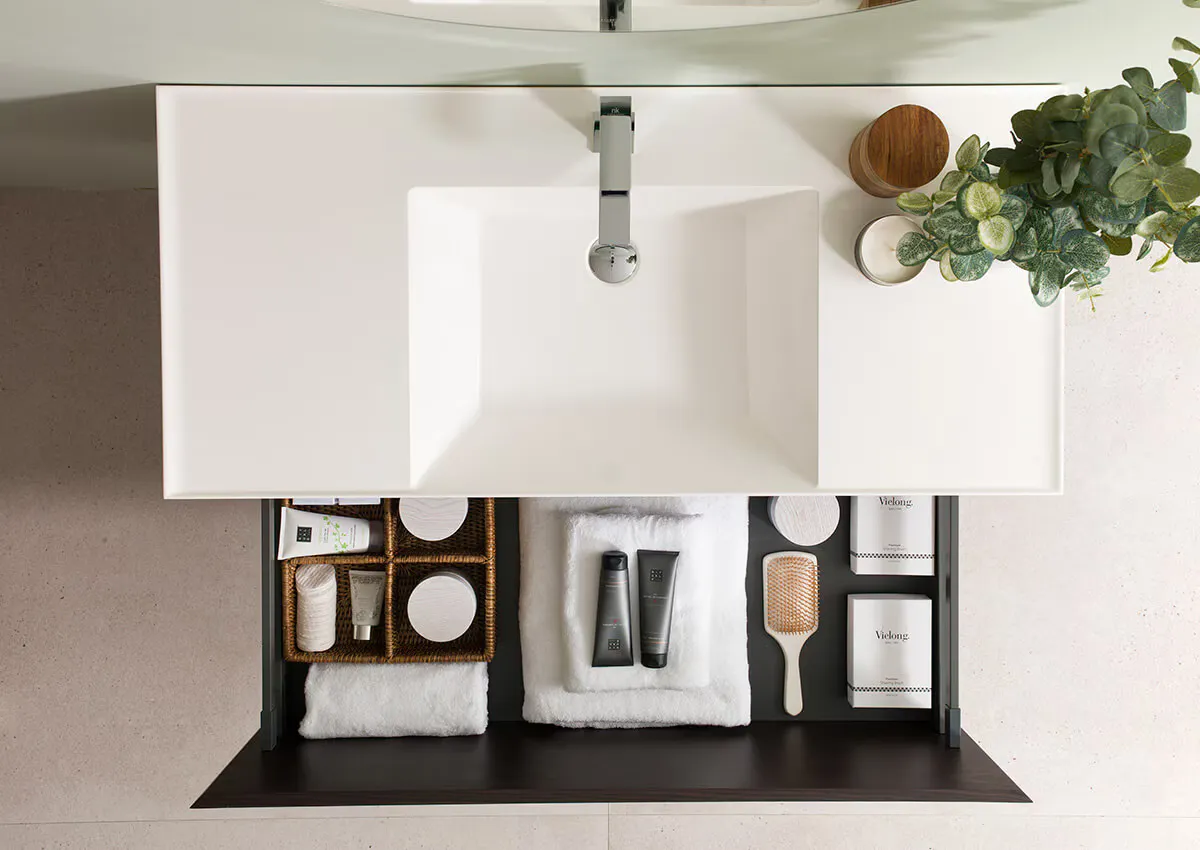
Vanity unit Wave 1C 110 cm Nogal Negro
Countertop One 110×50 cm
It stands to reason that you will need a lot more storage in a family bathroom than in a courtesy WC. The adage of never having too much storage also applies to the bathroom, nevertheless, so don’t underestimate your requirements. While the cloakroom vanity unit might be small and include a single cupboard the double vanity unit should accommodate as much storage as possible. Be clever with your bathroom vanity storage and include the following flexible storage accessories:
1.0 Divide the interior of the vanity unit base into shelves, drawers and cupboards. The exact division will depend on your family’s bathroom routines.
2.0 Soft-close mechanisms for pull-out drawers and cabinet doors are worth their weight in gold for bathrooms. Especially as noises tend to reverberate off hard ceramic tile finishes.
3.0 Match the base cabinet with floating shelves for even more storage. Some items like cosmetic packaging are attractive and you’ll want to see them, even towels stacked on shelves add a luxurious touch.
4.0 Be clever with your pull-out drawers and include space dividers for smaller toiletry items like trinkets, bath salts, nail brushes etc.

Duna Roble Noche
The look of the vanity unit can reinforce the style of your bathroom. Wall-mounted vanity units look modern and contemporary while the vessel-style sink matched with period faucets look more traditional.
Materials and accessories like taps furthermore add to the style. A dark timber base cabinet contrasted against white ceramic can provide a dramatic result. Maybe you want to add a pop of colour with a base cabinet in a laminate.
The world is your oyster however remember that the best results come about through coordinating the various elements, sink, countertop, taps and accessories.

Rondo 43 cm washbasin
Arquitect 140 cm vanity unit
Even a small vanity unit can be transformed through additional accessories such as a bathroom cabinet mirror. Extra storage for slim line objects and medicines is provided by bathroom cabinets together with a useful mirror. The bathroom mirror with lights also adds dimension and indirect lighting for personal grooming.
Similarly, integrated LED lighting can add a soft illumination to create a Spa-like ambience and a designer flourish. Add LED strips under a wall-hung vanity unit to highlight the floating effect. Towel rails can be attached to the vanity unit in matching metallic detailing to complement the faucets.
Bathroom vanity units are not a straightforward item of furniture, there is a lot to consider. But the results can be spectacular. Make an appointment at your nearest Porcelanosa showroom to see a range of inspirational vanity units before committing to any design. And, in the meantime, drop us a line with any queries regarding the information included in this guide.