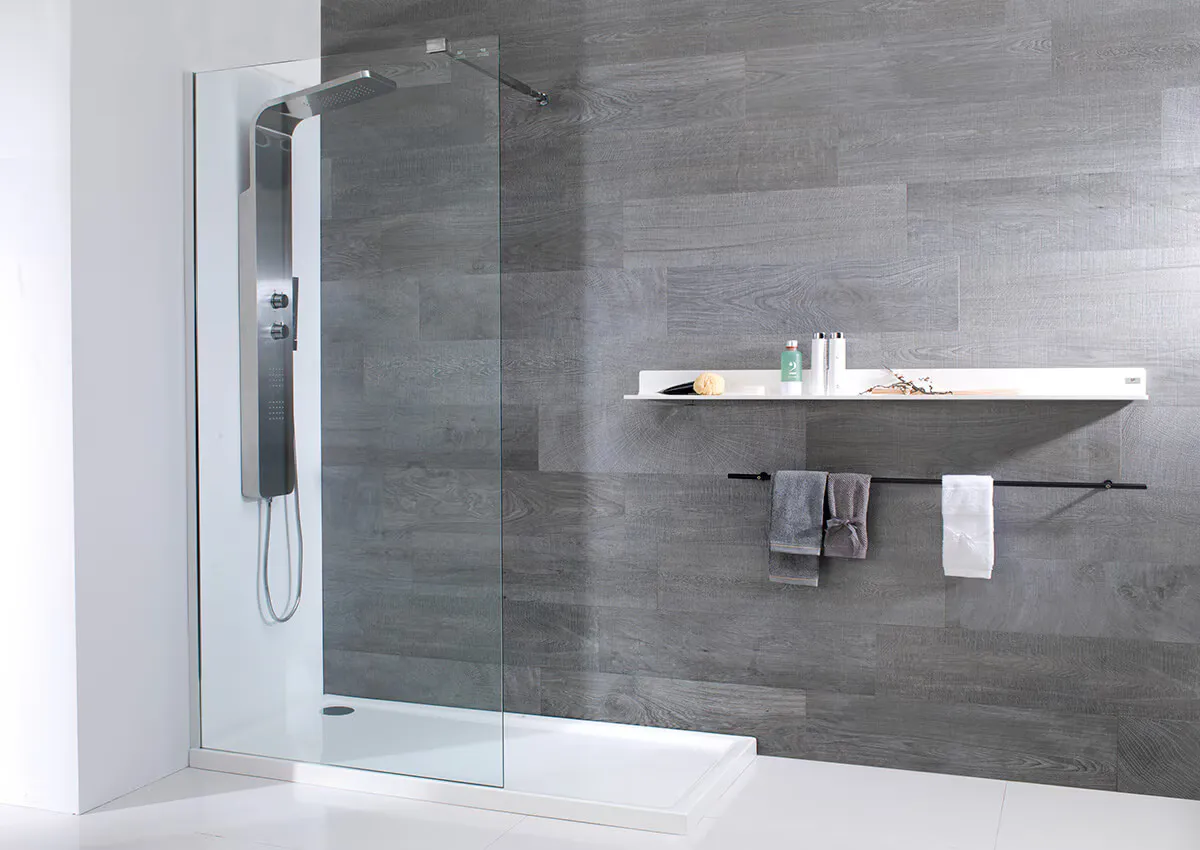
How the Walk-in Shower Enclosure is Changing Bathrooms
Current trends in bathroom design are more stylish and practical than ever, take the walk-in shower enclosure, for instance. Nothing matches the simple-to-use and attractive design qualities of an easy-access, glass-fronted shower niche.
The clean lines of a walk-in shower enclosure add a contemporary aesthetic to bathroom design. Space flows uninterrupted, which adds to the sensation of spaciousness in bathroom layouts. The hassle-free entrance and exit make this style of shower the best option for a lifetime home. The level floor access avoids the tripping hazard of standard shower cubicles. There are fewer surfaces, awkward opening mechanisms and tracks to keep clean, so maintenance of the shower screen is also easier.
Join us as we explore the great potential that the walk-in shower enclosure can add to your dream bathroom.
Optima walk-in shower enclosure
What is the difference between a walk-in shower enclosure and a cubicle?
The terminology can be confusing, but we are here to help. The walk-in shower enclosure is open to the bathroom space with no opening doors or curtains. Therefore, there is a minimal protection around the shower stream, just enough to direct the flow of water towards a central floor drain. The walk-in shower enclosure is similar to a wet room but with more protection from splashes.
On the other hand, the sealed shower enclosure is more closed off from the rest of the bathroom. The controls, the showerhead and the tray are all contained within a metal frame structure with glass panels and/or doors. The water spray is therefore confined to the shower cubicle and separated from the rest of the bathroom.
Yove walk-in shower screen
The advantages of a walk-in shower enclosure
The access to walk-in shower cubicles is open, there are no doors to pull open or curtains to draw back. When you want to use the shower, you simply step onto the shower tray. The walk-in shower enclosure is usually fitted with a rainfall shower head and a separate handset spray. Therefore, the wall tile finish within the enclosure is much more visible than the traditional shower cubicle. Similarly, the shower tray is closer to the bathroom floor and adds to the sensation of continuous space.
- Walk-in shower cubicles add a contemporary flourish to bathroom layouts.
- The minimal panel enclosure creates a sensation of extra space.
- Less likelihood of tripping thanks to the lower lip of the shower tray.
- Easier access for the mobility-impaired.
- Minimal hardware and free from tracks or closing mechanisms, making maintenance easier.
The best walk-in shower enclosures
Not every bathroom will be suitable for a walk-in shower. This style of shower comes with certain provisos. Bathroom finishes surrounding the shower area must be waterproof. Steam and moisture from the hot water spray are less contained and spread quickly throughout the bathroom. And there is less privacy. Nevertheless, the advantages of the walk-in shower enclosure are hard to argue with. The following criteria will help you choose a suitable design.
#01 Available space: You will need a minimum of 80 cm square (32 inches) for a comfortable shower experience. This area allows users to move around freely with room for the shower equipment.
#02 Shape and access: If you have enough space for a rectangular shower tray, the walk-in shower will feel roomier. Leave a gap of 85 cm for comfortable entrance and exit.
#03 Showerhead: locate the showerhead as far as possible from the entrance opening. This helps minimise splashes. For longer shower trays, you can fit more than one showerhead.
#04 Height of the shower enclosure: The ideal height is 200 cm above the tray, while the showerhead should be fitted between 183 cm and 213 cm above the bathroom floor.
Walk-in Shower Enclosure Design Ideas
Bathrooms with a walk-in shower have an unmistakable look, open and sleek with an understated luxurious quality. Although this approach is highly contemporary, the walk-in shower can work in any style bathroom, thanks to its minimal detailing. The most important aesthetic question, however, is the structure supporting the glass panel. There are two different approaches, which we outline below:
The supporting structure and metal profile holding the glass panel in place are almost imperceptible. Suitable for contemporary style bathrooms where the focus is on the surrounding wall finishes.
The walk-in shower structure has more of a presence with a more noticeable profile. The choice of metal and the configuration of the frame add to the bathroom design. The glass panel can be divided into panes to add more visual presence to the enclosure.
- Walk-in Showers with Tray Vs without Tray
Choose between either option, the walk-in shower and tray is easier to fit and helps define the shower area. Trays can be made of ceramic, resin, acrylic or stone. There is normally a minimal lip or upstand which supports the panel. This lip also helps keep water splashes contained. Click on our shower tray guide for more detailed information.
But you can also choose a continuous flooring option where there is no upstand, the floor tiles are laid to a fall within the shower enclosure. This is the recommended solution for small walk-in shower enclosures such as wet rooms.
Java walk-in shower screen
- UK Building Standards for Walk-in Showers
Nowadays, glass panels come with an easy clean protective coating, which is particularly important in hard-water areas. The choice of glass contributes to the look of the walk-in shower enclosure. Clear glass creates an open, spacious sensation; frosted glass lets the light through but provides a degree of privacy. Patterned glass or tinted glass, meanwhile, makes a designer statement.
Nevertheless, regulations state that the glass used for the walk-in shower screen must be toughened glass. This process involves heating the glass to high temperatures and then rapidly cooling it. In case of breakage, the glass panel shatters into granular pieces without losing its shape.
Current Trends in Walk-in Shower Enclosures
The metal frames for walk-in shower enclosures are normally manufactured from steel or aluminium. These frames are highly robust, resistant to moisture and help protect the glass panels. Traditionally, the frame is polished with a coating of chrome, brushed nickel or matte black. However, recent trends feature more daring colours that match with the sanitary fittings and ironmongery. Warm and reflective copper, gold and rose-tinted colours add a luxurious flourish. While cooler tones such as white and titanium complement other sanitary fittings in bathroom décor.
The coordination between the metal shower head and the walk-in shower frame structure enhances the overall effect. These accessories are much more visible in walk-in shower enclosures and add to the overall look and function of the shower.
Find Out More About Walk-in Shower Enclosures
The range of sophisticated shower room ideas is constantly evolving and improving the bathing experience. The walk-in shower enclosure is not only more comfortable in use, but it adds a modern flourish to the décor. Click on the link below to find out more online or make an appointment to visit your nearest Porcelanosa showroom. Meanwhile, if you have any questions regarding the content of this article, drop us a line and we’ll get back to you.