
Over recent decades the trend in bathroom interior design has been towards a sleeker, more habitable room-like décor treatment.
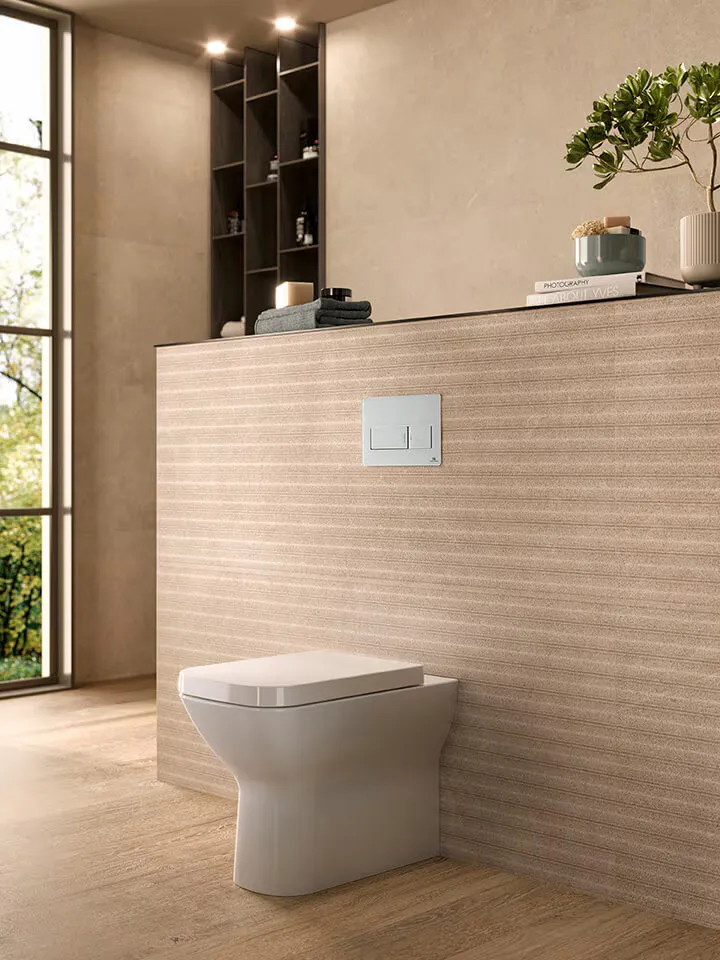
Over recent decades the trend in bathroom interior design has been towards a sleeker, more habitable room-like décor treatment.
The concealed toilet cistern forms part of this evolution in sanitaryware. Accommodating the cistern element of the toilet within a wall void or boxed-out shelf looks neat and results in less cleaning and easier bathroom maintenance.
Concealing the cistern helps to convert the bathroom into a relaxed spa-like space you can enjoy daily. The concealed cistern and toilet have many advantages over the close-coupled toilet. Below we look at the why, the how and the where of the concealed toilet cistern.
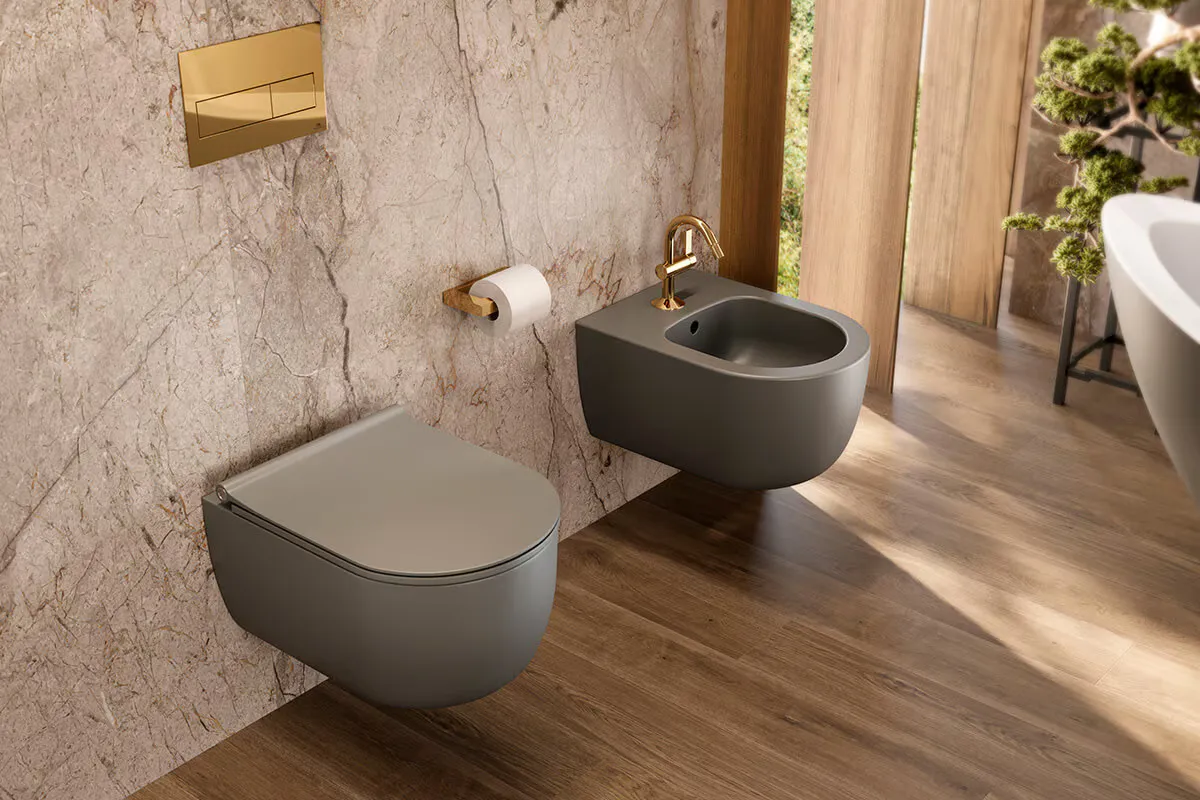
Acro Compact Rimless concealed cistern toilet
The typical home WC or toilet consists of the ceramic bowl on which we sit, the cistern where water is stored, and a release mechanism, the flush. This traditional arrangement is also known as the close-coupled toilet that includes these two parts. The toilet bowl is either hung off the wall or sits on the bathroom floor. The waste connection is generally hidden by the casing of the bowl.
The system works on the principle of gravity, when water from the cistern is released, it flows around the bowl and disposes of waste. The weight and speed of the water rushing around the bowl ensure hygiene. The concealed toilet cistern, however, hides the water tank element within a cavity and is therefore not seen.
The concealed toilet cistern
By hiding (or concealing) the cistern within a cavity the toilet pan is the only visible part of the WC. Except for the flush plate or handle which can be located remotely if necessary. The WC works in the same way as the traditional toilet, the only difference is the cistern is not on display.
This option is compatible with a wall-hung WC or a conventional floor-supported toilet pan. With the concealed toilet cistern, the tank can be accommodated within a very narrow dimension. Clearly, there must be access to the cistern in case of maintenance and repair. This is typically facilitated by a large enough flush panel or an entire removable wall panel.
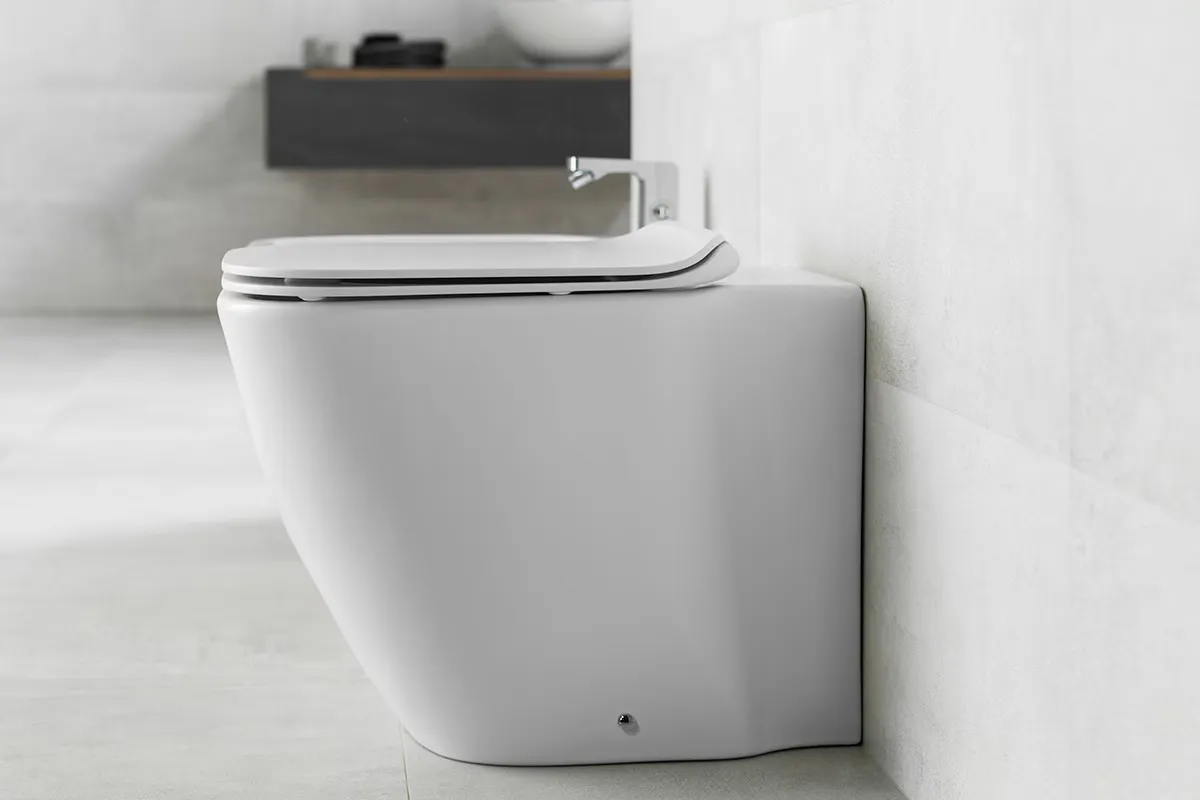
Essence C BTW pan with concealed cistern
Together with the dual mechanism flush button, the hidden toilet cistern represents an advance in bathroom design. The concealed toilet cistern adds to the sensation of a habitable room rather than a functional amenity in the home especially.
Nevertheless, there are several considerations to take into account before opting for a concealed toilet. Remember that this option involves some building work so it’s advisable to include it within a complete bathroom refurbishment. Or as part of a new build. Here below we look at the advantages and possible concealed cistern toilets problems.
Top-quality
Toilets
Attractive appearance, innovative features and comfortable usage. And best of all, available online.
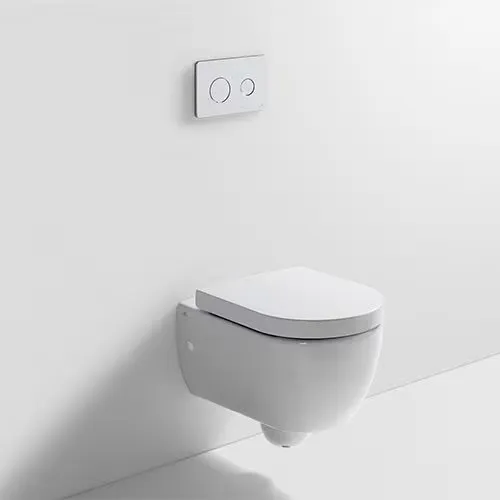
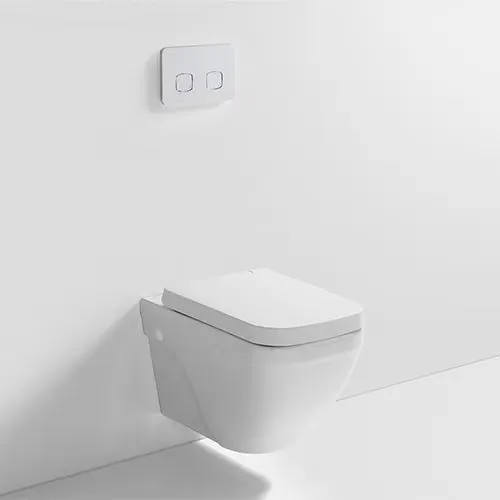

Acro Compact Rimless wall-hung toilet
Urban C BTW concealed cistern toilet
Also known as the back-to-wall toilet with concealed cistern there are two main options to choose from. One of these will be the most suitable depending on the structure of your home:
1.0 Within a wall partition, either wet wall or drywall construction.
2.0 Inside a built-out shelf or piece of furniture.
The results are very different for each of these options. For a new build bathroom, the partition wall can be designed in such a way that the cistern is housed within the wall cavity. And the bowl can also be structurally supported off the partition structure. Here the wall-mounted frame can be as slim as 140mm which allows for an insulated model (recommended to help avoid condensation).
Alternatively, for an existing bathroom, the partition behind the back-to-wall toilet can be boxed out to above cistern height. The cover panel can then be tiled or painted to match or complement the bathroom wall finish.
The top of the resulting shelf can provide useful additional bathroom storage. And lastly, a combined or sit-alone piece of cabinetry can also house the concealed cistern, placed against a wall. A combined unit might incorporate the WHB as well as the toilet bowl, which is a good option for an en-suite.
We advise you to employ a qualified plumber to carry out the installation of your concealed toilet cistern. Nevertheless, you can watch this short video to understand how ingenious and how simple the installation process can be. The video includes a drywall (stud partition) example and a wet wall (bricks or blocks) example.
It is hard to explain in words and images the difference that a concealed toilet cistern can make to your bathroom. It’s no exaggeration to say that by hiding the water tank bathroom walls become liberated from function.
We recommend you visit your nearest Porcelanosa showroom for toilet inspiration. And where the professionals will walk you through the installation process. If you have any questions meanwhile, just drop us a line and we’ll get back to you.
Make an appointment
The choice of concealed toilet cistern depends on the particular situation, i.e. whether it’s a new build, a refurb, the type of construction etc. However the actual cistern should be WRAS (Water Regulations Advisory Scheme) approved whatever the final choice.
Seldom in theory but in practice provision must be made for access to the concealed toilet cistern. If there is constantly flowing water in the bowl, if the flush is weak or if it takes longer than usual to fill the tank then the cistern needs to be accessed for repair. Remember toilets are manufactured to last, a life span of 50 years is not unusual, so it’s quite possible the cistern or parts of it, will be replaced several times over the toilet’s life span.
The built-in toilet provides greater freedom for the placement of the flush mechanism. Therefore, a large flush plate positioned correctly is ideal for accessing the cistern when required. Depending on whether there is a shelf, or a vertical wall access the flush panel can be vertical (wall mounted) or horizontal (shelf mounted). Nevertheless, with some concealed cistern designs an entire tiled panel can be removed to allow full access to the water tank. Note: We recommend buying your back-to-wall toilet unit with a concealed cistern from a reputable provider. You may need spare parts in the future and standardised replacement parts are easier to source.
The trick is to make sure everything lines up in terms of the connections and that once complete the toilet bowl hides any plumbing. This way all that is visible is the bowl itself wither hanging or sitting snugly against the bathroom wall. The guiding principle for all cistern types is the same, below we examine installing a concealed toilet cistern within a bathroom furniture installation.
Firstly line up the toilet pan so that is positioned on the centre line of the waste pipe within the bathroom furniture. Then measure the distance off the flooring for the water feed (connecting the flush) and the waste disposal.
Once noted mark the MDF panel of the furniture to allow for a cut-out that will accommodate both. Remove the panel and with the appropriate cutting tools cut the rectangular opening. Then fit the cistern from above using the proprietary clips and screws supplied for the selected model.
Using a flexi-pipe connect the cold water feed to the cistern. Connect the U bend water pipe from the cistern which will protrude past the carcass of the bathroom furniture. Measure the free distance for the pipe to couple with the lip of the water connection bowl and then cut the protruding cistern pipe accordingly making sure to allow for 5mm leeway.
Similarly with the waste connection pipe measure and cut the 100mm diam. waste pipe accordingly and connect to the soil pipe. Tip: use washing up liquid to lubricate the pipes and their housings when connecting. For the flush plate follow the same procedure but use a jigsaw to cut out the opening in the panel. Its position will depend on the cistern model.