
Before investing in a home refurbishment project, we want to be sure whatever materials we choose represent a good investment. Subway tiles constitute an unparalleled investment for enhancing one’s residential environment.

Before investing in a home refurbishment project, we want to be sure whatever materials we choose represent a good investment. Subway tiles constitute an unparalleled investment for enhancing one’s residential environment.
We have collected the Top 5 selection criteria for this timeless and elegant design. And we also include examples that will inspire your imagination and illustrate exciting new possibilities. Read on to explore a comprehensive overview of metro tiles.
Mediterranea Calpe Grass 8×30 (Available in store)
The emergence of the metro or subway tile dates back to the first mass public transit systems. Cities like New York, Paris and London were expanding rapidly in population during the early 19th Century. Then, there was a need to move high volumes of people around easily.
So, the Subway (New York), Tube (London) and Metro (Paris) came into being with all the inventiveness of the industrial age. There was a demand for a high-quality and resistant cladding material for the access tunnels and platforms of these systems. The subway tile, as we recognize it today, originated from its initial development for the New York Underground.
It was in the year 1904 that the story of subway tiles began. Then, architects Heins & LaFarge came up with a ceramic tile adaptable to the vaulted ceilings and walls. Additionally, it coped with the need of being cheap to produce, hygienic and easy to maintain. The selection of the white subway tile was the sole option available during that period.
First adopted in the States, the subway or metro tile soon became the ‘go to’ tile for all underground transport systems. But not only that, public buildings and private homes during the Victorian era also utilized it.
Mass-produced and versatile, the gloss finish brought luminance to any space, whether it be an underground tunnel, an institutional building, or a home pantry. Most importantly of all, they were easy to keep clean.
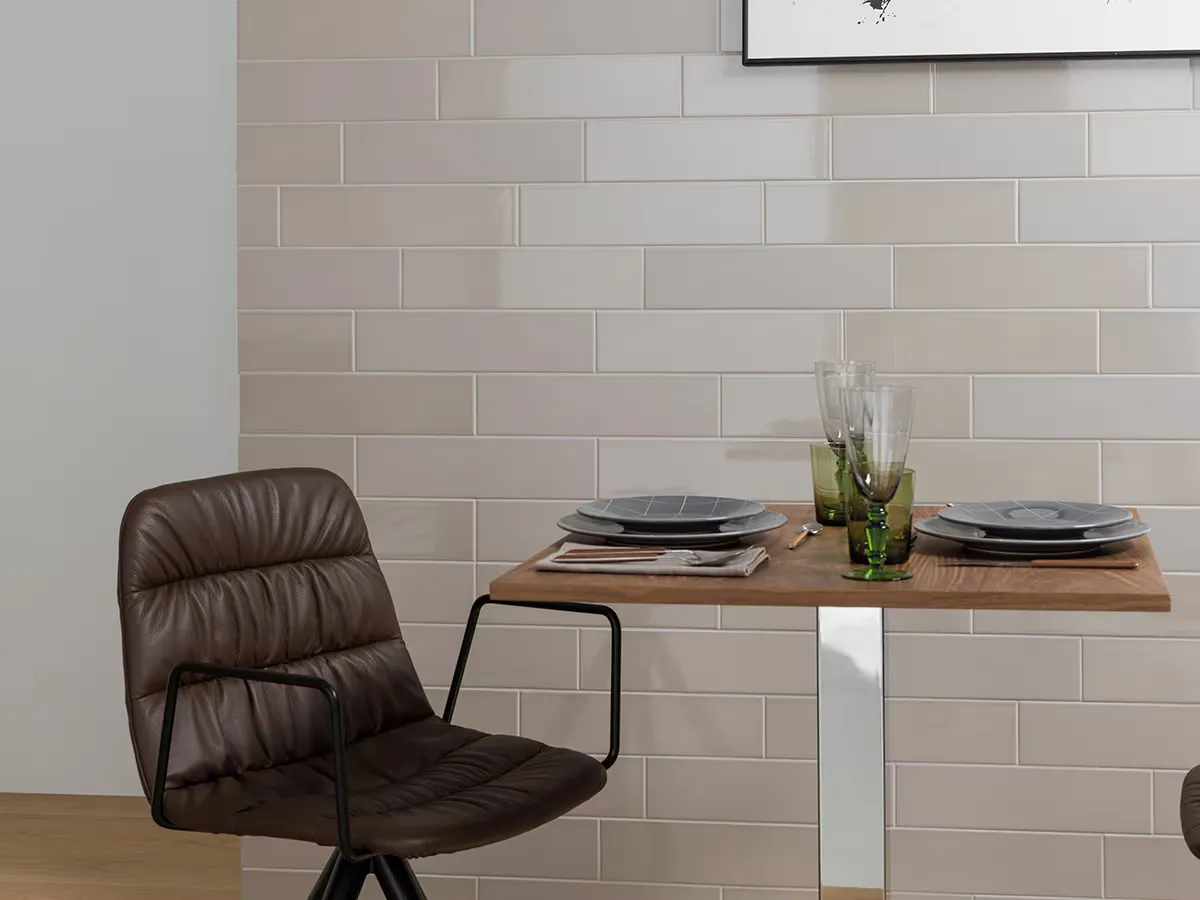
The reasons for using the metro tile today in home décor remain unchanged from its original development years ago. The looks, the range of applications and the easy maintenance are especially hard to match.
The sheer versatility of metro tile makes it equally suitable for a fireplace surround, kitchen backsplash, stylish bathroom, etc. With all the variations in size, colour, pattern and grouting, there’s no need for any two applications to be the same. Many tiles do not possess this characteristic. Here below we’ve put together a list of the basic criteria you need to think about before making your selection.
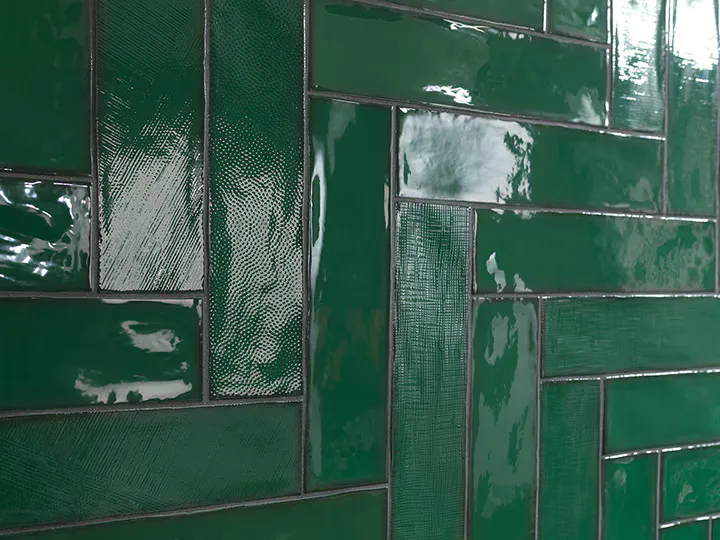
Touch Bottle (Available in store)
Several criteria will determine the right metro tile for your project. The metro tile will provide a bespoke tiling solution if we consider carefully these options.
The first dry-pressed ceramic metro tiles took on the proportions of brick. That is to say, the height was twice the length, 3 inches x 6 inches (roughly 75mm x 150mm). Since then, the metro tile has evolved to square formats, larger rectangular formats and elongated formats. The right size depends on the space available and the dimensions of the room in question.
Although the first metro tiles were flat with a slightly rounded edge, other options soon appeared. A bevelled edge version soon gained popularity.
The modelled effect is entirely different to the flatter metro tile. In the light, the edges take on a reflectance with a more three-dimensional quality that adds depth to a space. Another alternative option worth considering is the handmade metro tile, a flat tile with a rustic relief texture.
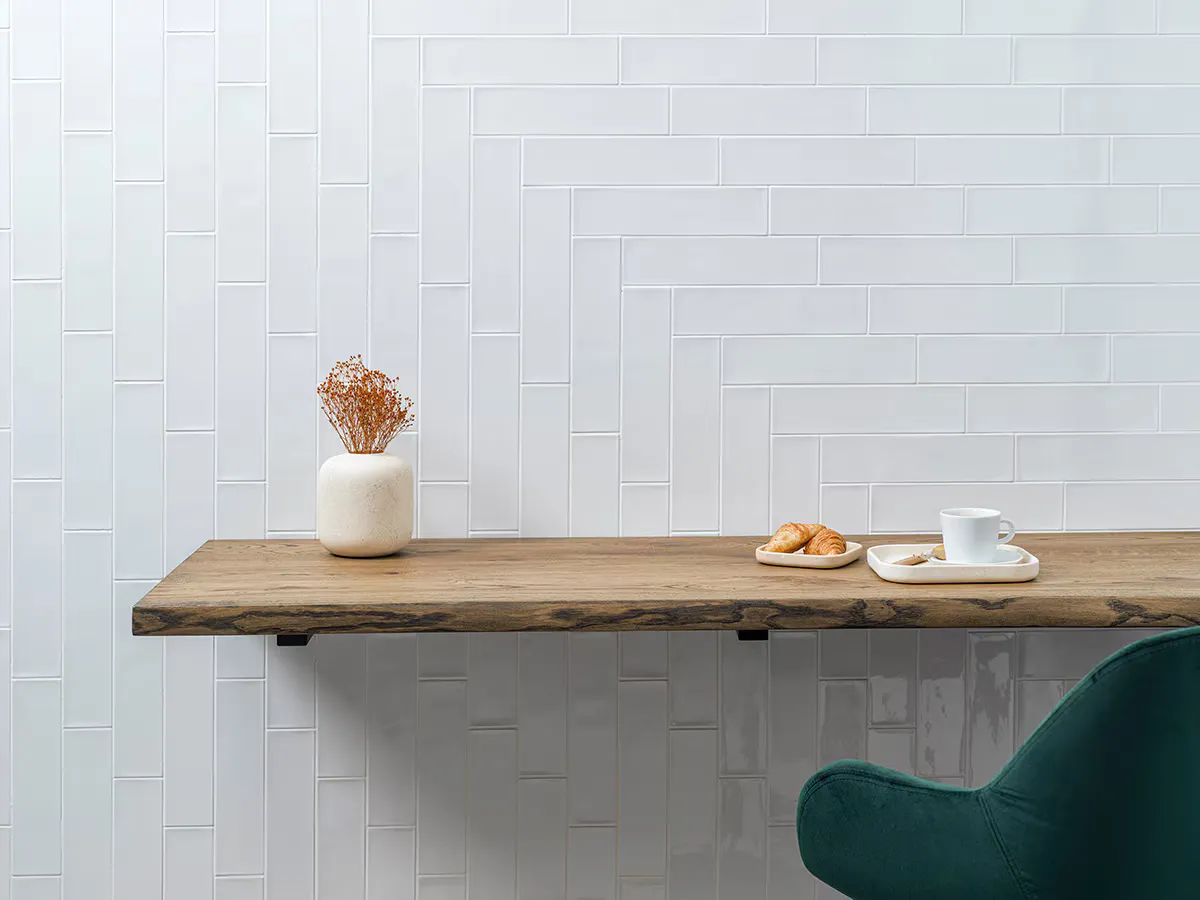
Mediterranea Calpe Blanco 8×30 (Available in store)
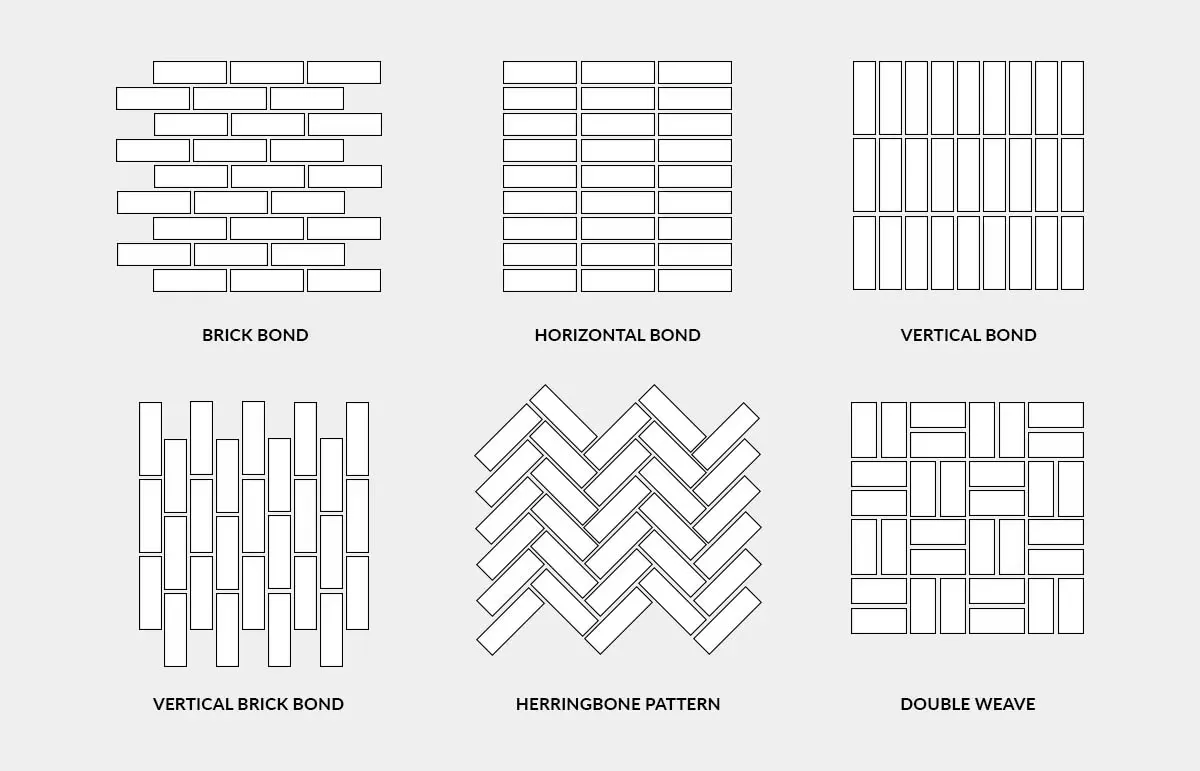
One of the reasons for the popularity of the metro tile is its versatility. That means achieving very different looks by varying simple design considerations. Like the patterns which determine how to fix the metro tiles to the walls.
The most popular patterns in the UK include:
The choice of colour is the single most important consideration after the metro tile selection. Colour radically impacts on the perception of space and can enhance, as well as detract from it. Although colour is a subjective matter, conditioned by culture and precedent, there exists empirical data we can draw on to help us choose.
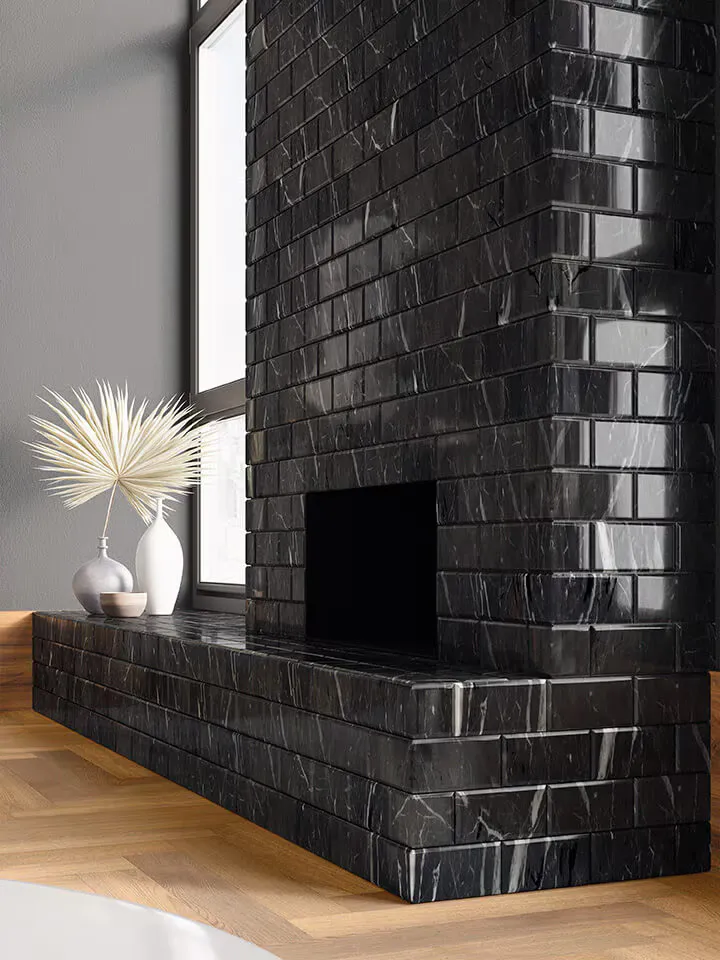
Athena Negro Marquina Pulido 30.2×30.7 (Available in store)
Accent Effects
Be playful and daring with black or metallic metro tiles. The effect is eye-catching and is recommended for adding a ‘wow’ factor.
The choice of matt or gloss finish has a significant impact on the final effect of the metro tile. Gloss finishes, as a rule, make a space appear larger and thus are appropriate for smaller areas such as bathrooms.
However, the matt tile hides dirt better and provides a better grip in areas like the bathroom. It might be a consideration if you have small children. However, counter-intuitively, matt tiles are more difficult to keep clean. A damp cloth is usually enough to restore a glossy underground tile to its pristine state.
Beyond the mass transit systems, subway tiles became popular for cladding butchers’ shops and pantries during the Edwardian era. Today, we associate subway tiles with stylish restaurants and delicatessens. The look can be yours with the exact same tile given a fresh and contemporary treatment. Experiment with metro tiles kitchen décor through colour, pattern and dimension to convert your kitchen into a master chef TV studio.
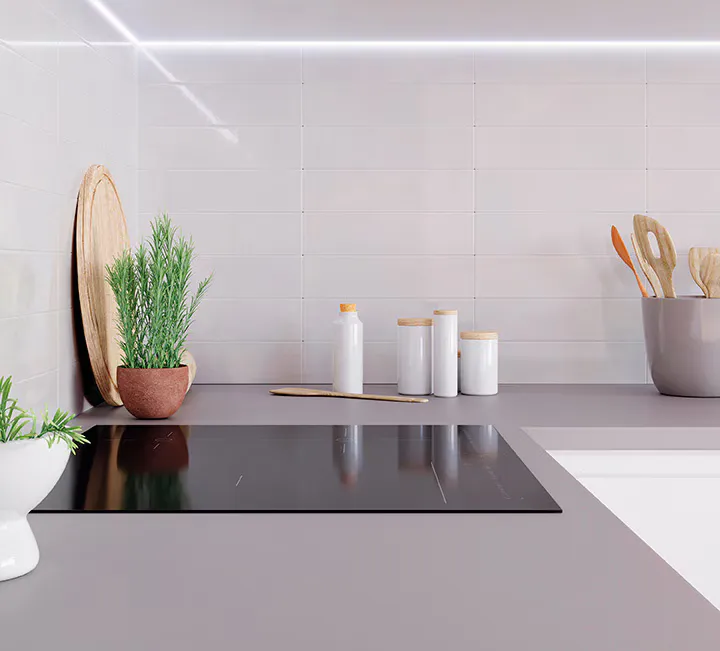
Use the subway tile to create a stylish backsplash.
Bathroom metro tiles are chic and sophisticated in equal measure. Combine period or cutting-edge sanitary ware with subway tiles for a designer bathroom.
The white metro tiles bathroom will compensate for the lack of light if there is little or no natural light. Other colours will add character, especially in more daring patterns. The following suggestions will add instant character to any bathroom space:

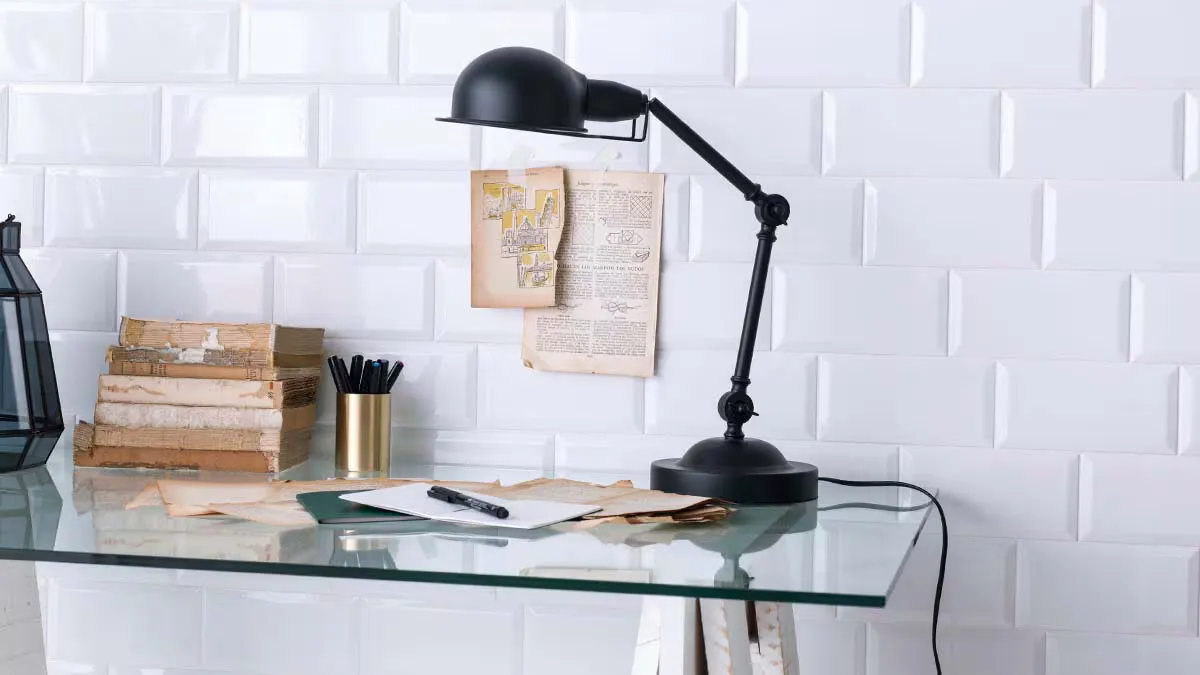
Beyond the kitchen, bathroom and living room, subway tiles have other useful applications. For instance, dare to create a feature wall behind a work desk. The metro tiles finish protects walls against scuff marks and delineates an area of work.
You can simply incorporate the area into the bedroom, living room, or any other location that offers a suitable workspace. Just add shelving and an internet connection. Remember the beauty of subway tiles is their versatility, one design or another will complement existing décor.
Make an appointment at your nearest Porcelanosa showroom to appreciate all the possibilities offered by subway tiles. The sheer variety of shapes, colours, finishes and patterns will surprise you. No matter what interior décor style you are after, there’ll be a metro tile waiting for you to transform your home.
Finally, in case you still have questions about metro tiles, we’ve included some frequently asked questions and recommendations.
The grouting you choose is as important as the metro tile. And it’s subject to the same vagaries of fashion and trends in interior design. Dramatic contrasts between the tile and the grout are no longer as popular as they were a few years ago. Nowadays, it’s all about subtlety. So, off-white with white, light grey with darker grey etc. will look great over time.
In small spaces, every detail counts, as they make an enormous difference to the overall look. An edge trim or profile will provide a clean finish to the surrounds of those splashbacks that do not reach the bottom of wall cabinets or end walls. A trim is also recommended for exposed corners, where two tiled walls meet. The depth of the trim is determined by the thickness of the tile. Consult with your tile provider for further information. As a general rule, it’s better to leave a little wiggle room, say 2mm.