Non-slip flooring tiles, future proofing the home
Making sure our homes are geared towards avoiding preventable accidents can be as simple as choosing non-slip flooring.
Whatever our age or mobility, the home environment is one that must be adapted to the specific needs appropriate for those circumstances. That could be hazard proofing a home against dangers for toddlers, by installing a gate at the top of stairs; widening door frames to accommodate wheelchairs or laying non-slip flooring in showers, wet areas and bathrooms.
Falls in the home account for many of the injuries sustained by older people, and wet floors are a prime hazard. Non-slip flooring in key areas of the home isthereforehighly recommendedespecially for bathrooms, wet rooms, hallways and external terraces. Inside or outside, investing in non-slip flooring represents another layer of protection for the home over time.
Homes for life & non-slip flooring
Anywhere where floors can get damp, either indoors or outdoors, should be given extra attention with regard to the choice of finishes and materials.
There is absolutely no reduction in design options for non-slip flooring and as such we have put together a few ideas and suggestions to make the home more ‘senior friendly’.
Non-slip flooring
There are several measurement systems that provide a reliable indication of the degree of non-slip properties: Coefficient of Friction (CoF), Floor Surface Roughness (Rz), The R Rating (Ramp Test Rating) and The ABC Rating (Ramp Test Bare Feet Rating).
The most common rating for tiled floors is the R Rating, undertaken on an inclined ramp surface with ratings varying from R9 (least slip resistant) to R13 (most slip-resistant). Common to all these approaches is the measurement of resistance to slipping on a wet surface. Porcelain tiles are an excellent option for non-slip flooring given the range of designs available and the R Ratings.
Non-slip tiles for indoors and outdoors
While clearly there are major differences, the principles of non-slip flooring are similar for outdoors as well as indoors. The specific properties that make them suitable are:
- Extreme durability, highly resistant and will last over time.
- Improved colour retention.
- Non-slip porcelain tiles have a regular and smooth finish just like any other tile.
- No additional or special maintenance is required.
Non-slip flooring for bathrooms
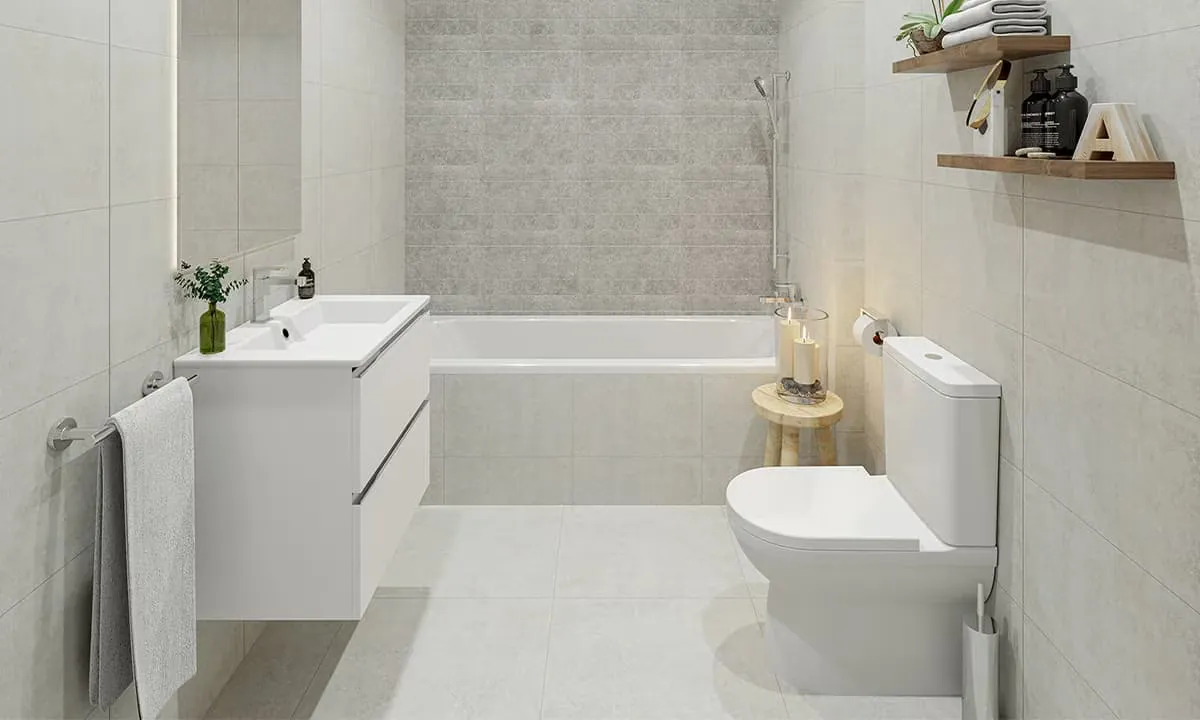
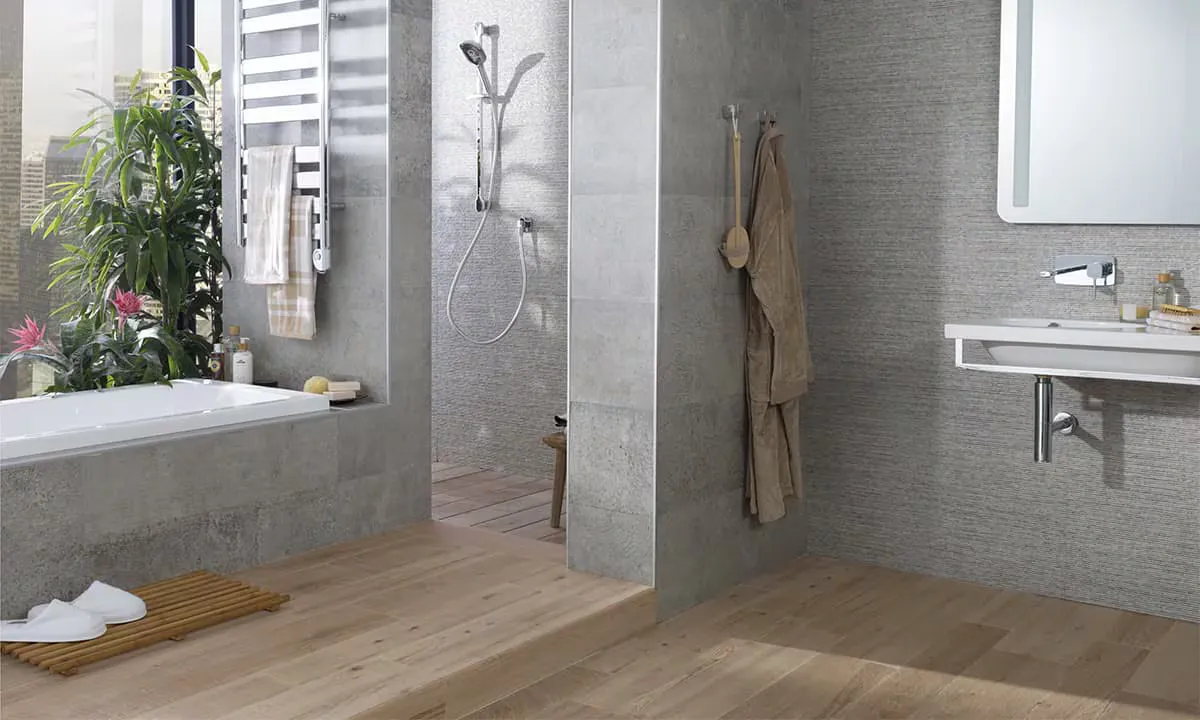
In preparation for getting older, there are some simple but highly efficient changes we can make in the bathroom. The senior-friendly bathroom should be designed for the mobility impaired, wider door frames, 32 inches is recommended to allow wheelchair access (81.5 cm), a level access shower, fitted grab rails and handles for WCs and baths. And choosing non-slip floor tiles is just another way to help ensure against potential accidents. The array of choices in terms of the non-slip tiles available means not compromising on the décor.
Non-slip bathroom flooring ideas
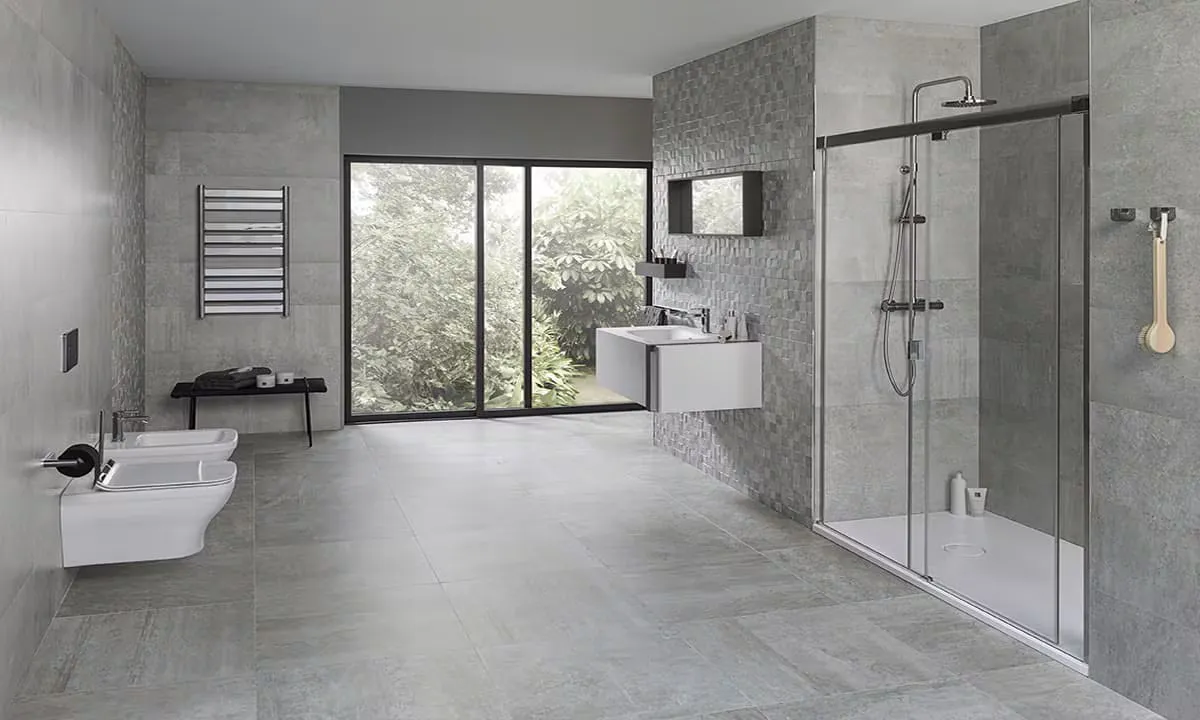
A larger format tile is recommended for non-slip bathroom flooring because the fewer the joints between the floor tiles the better. Nowadays the larger format porcelain tiles have practically no joints so there are fewer trip hazards. Another consideration would be the colour; a definite chromatic contrast with the bathroom artefacts (WC, grab rails, baths etc.), which are normally white, is a good idea. Grey, dark grey or beige can not only look very elegant in the bathroom but also provide sharper colour contrast and so help avoid falls.
Non-slip flooring wet room
Choosing a wet room rather than a wheelchair accessible bathroom may depend on the space available in the home. To accommodate a wheelchair-accessible WC the minimum recommended dimensions are 220 cm by 150 cm. The recommended dimensions for a bathroom with a walk-in shower that can be comfortably negotiated in a wheelchair are 230 cm by 240 cm. So converting a downstairs WC or an en-suite into a wet room might be a good idea for senior proofing your home.
Non-slip laminate flooring
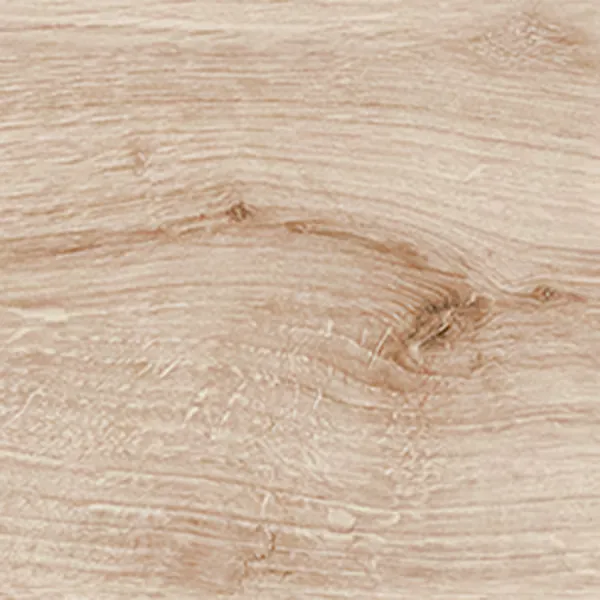
Because of its composite nature, non-slip laminate flooring can be achieved by adding an extra layer. This non-slip surface finish is applied to the embellishment layer which lends the laminate flooring its appearance, often recreating the look of wood. The entrance hall, circulation corridors and the kitchen are the best places to install non slip laminate flooring. In addition, the properties of non-slip laminate flooring include:
- The non-slip finish doesn’t require any additional special cleaning.
- Laminate flooring will provide the warmth and traditional looks of timber but with none of the maintenance requirements.
- Laminate flooring is almost indestructible and will last and last.
- Non-slip laminate flooring is easy to install and represents good value for money.
Alternative non-slip flooring ideas
Apart from non-slip porcelain tiles and laminate flooring, other options include:
- Vinyl, there are numerous special finishes available with non-slip vinyl flooring including different patterns, colours and textures. The finish is popular in schools, hospitals and other public buildings because it represents good value for money.
- Cork or bamboo tiles, presenting great anti-slip properties but they do not age particularly well and will require maintenance.
- Rubber tiles with raised studs; this is a very popular option for public buildings and areas where Public Indemnity insurance is an issue. Although efficient as a material it is not to everyone’s taste and can look ‘institutional’.