White kitchen floor tiles: what works best?
Can a white kitchen be cosy? We think so! Here we explore what colour floor tiles should be for a white kitchen to avoid looking cold or sterile.
If we were to list the three most important elements of kitchen design, they would be the cabinets, the worktop and the flooring. These three features determine the overall kitchen décor, so they must be considered together. This is especially true for white kitchens, as they require careful attention to detail to avoid looking cold or sterile.
Flooring is one of the best ways to complement white kitchen cabinets because it balances reflective and absorbent surfaces. After explaining the pros and cons of a white kitchen, now we explore what colour floor tiles should be for a white kitchen.
Choosing flooring for a white kitchen
The best flooring for kitchens depends on many factors, which we will examine below. Nonetheless, opting for resistant kitchen flooring is a given. In terms of total square meters (or feet), kitchen flooring is the largest area to finish. And as such, a kitchen floor has to meet many requirements placed on it. Since the kitchen is essentially a workplace, health and safety criteria apply. It is also a room where we entertain and receive guests, especially in an open floor plan.
The key practical considerations for the kitchen floor include:
- It must be hard-wearing to withstand additional footfall in the kitchen
- It must be moisture and stain resistant
- It must be non-slip, even when damp
- It must look good
#1 White kitchen floors
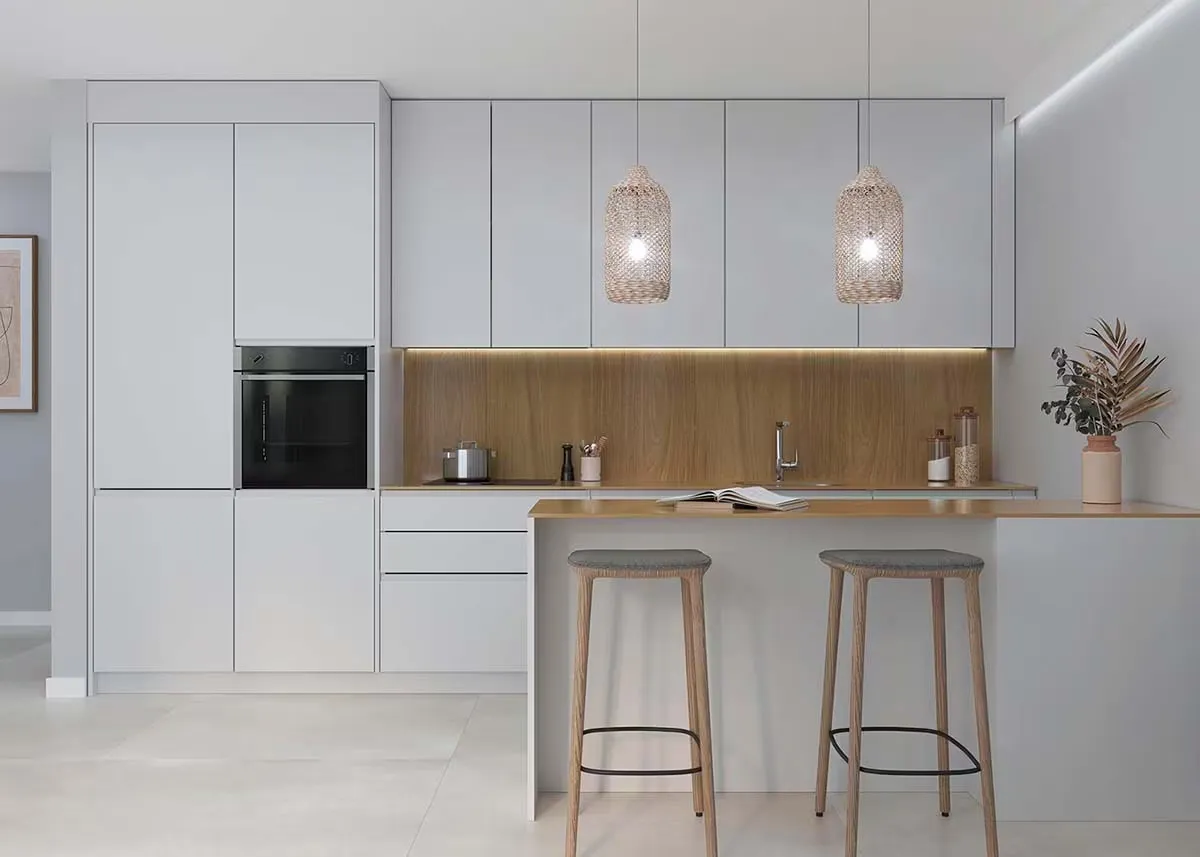
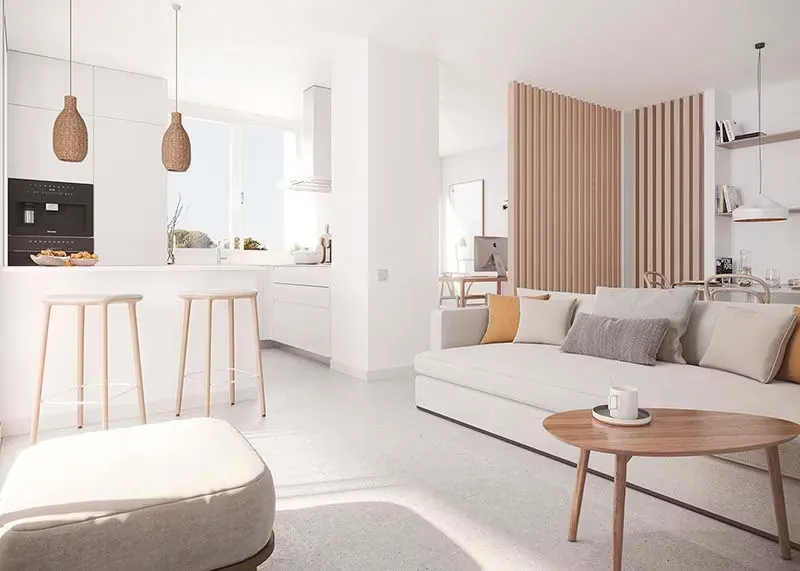
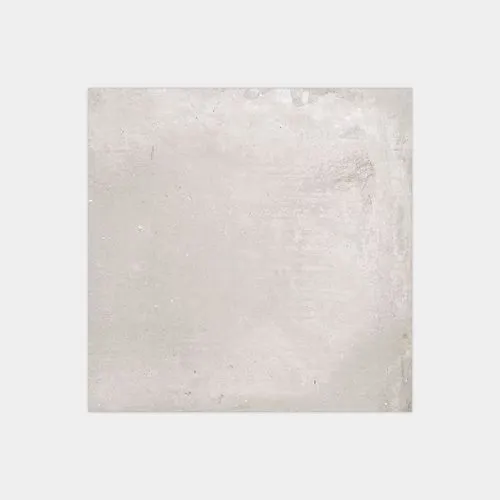
For the purists among you, a white kitchen calls for a white kitchen floor. This is a delicate design trick to pull off, but it rewards the effort with an integrated result. Because of the sheer number of shades of white, combining complementary but noticeably differentiated tones is highly recommended. Another simple hack to make white flooring work is to choose dark grouting that adds to the modular nature of the floor tiles. And it looks really stylish.
#3 White kitchen & wood floor
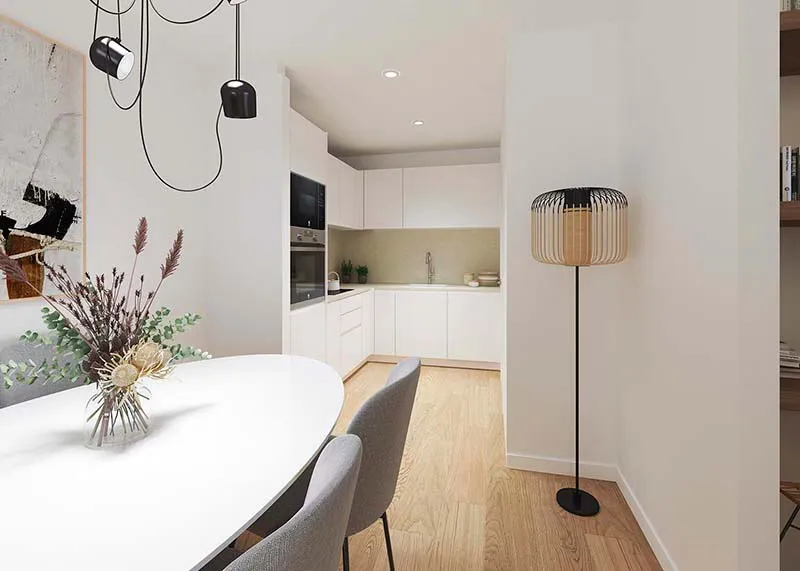
One of the most versatile colour pairings for kitchens is white and natural wood or wood effect. Even so, there are multiple options with the colour of the wood, from light pine to dark hardwoods. This elegant combination lends itself to Scandi, minimalist, rustic or contemporary-style kitchen cabinets. The timber grain provides the ideal foil to a sleek white cabinet, gloss or matt. Wood effect tiles, laminate flooring or vinyl tiles win out over natural wood around the working area of the kitchen cabinets thanks to their indestructibility. Resistant to wear and tear, slip-proof, waterproof and gorgeous looks are combined with these alternatives to natural wood.
#5 White kitchen & grey floor
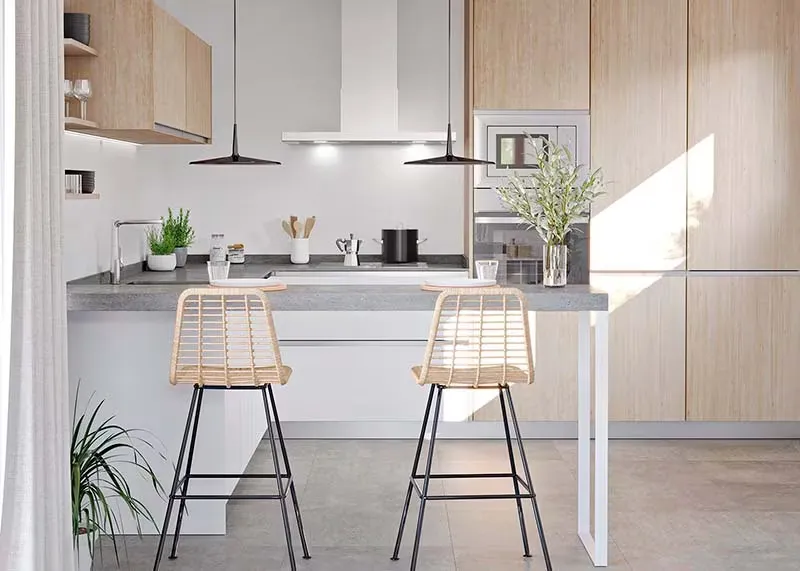
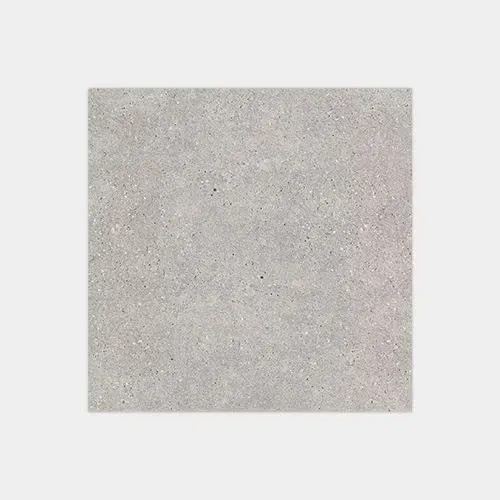
One of the best colour combinations for a white kitchen is grey because it is chromatically related to white. Without slipping into black, there are many shades and colour intensities within grey to satisfy any taste. The shade choice depends on the available natural light and individual taste.
Colours & textures that combine with white kitchens
The choice of colour may be a function of the flooring material. This depends on the decorative effect we want to achieve; Below is an overview of popular tiles that go well with white kitchens.
#1 Concrete effect tiles
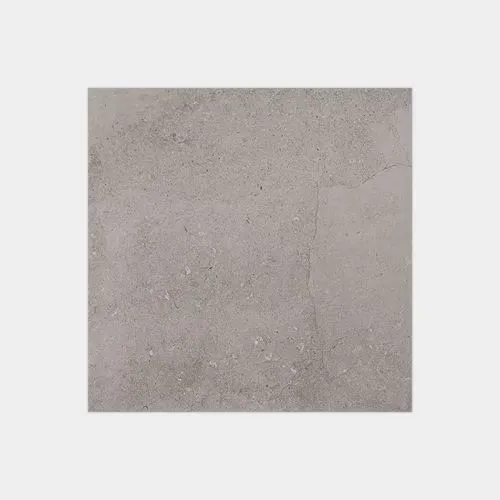
For a more industrial-look kitchen, the concrete effect tile in porcelain offers an authentic look and texture. Large-format tiles with minimal joints will help create a continuous flooring look. Against a gloss white cabinet door, the effect is elegant yet very hard-wearing.
#2 Grey marble effect tiles
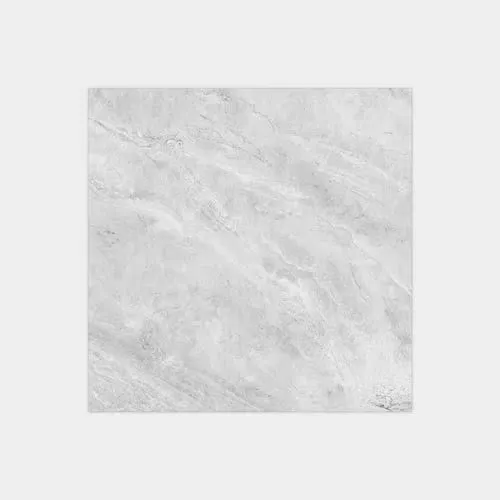
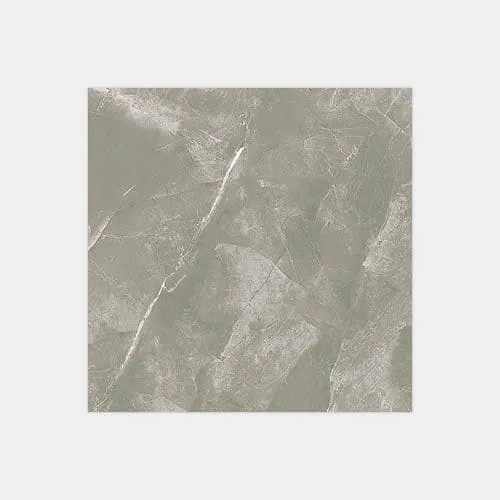
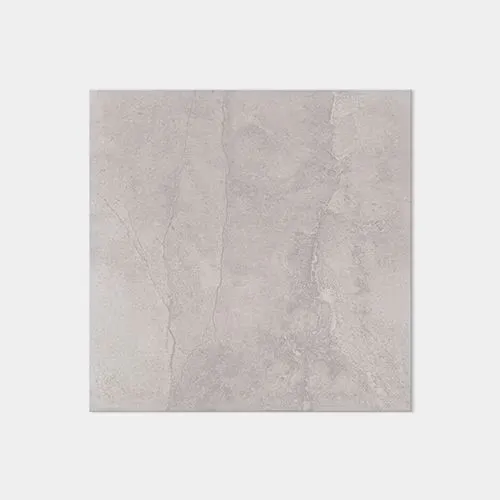
A classic décor choice, grey marble looks very elegant against white. The veining pattern is the ideal foil to the even white cabinets, adding texture and visual interest.
#3 Patterned tiles
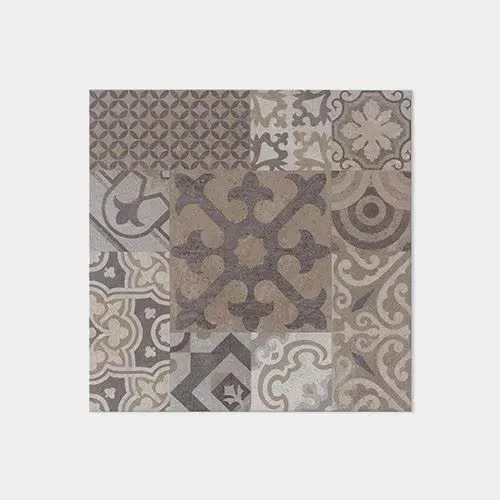
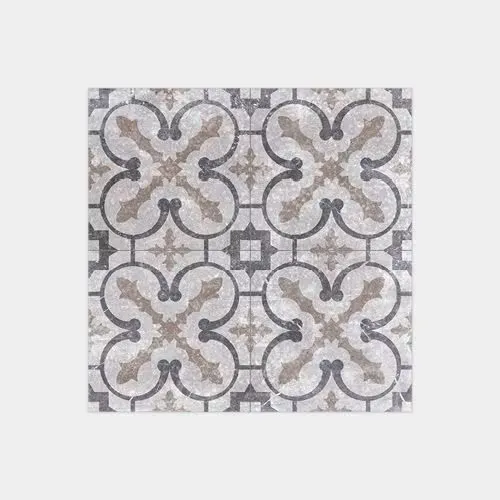
Against the block-white cabinets, a pattern floor tile can become more of a feature in the kitchen. Try to keep a busy geometric pattern within a more controlled colour palette. A single or perhaps two colour scheme will work best.
#4 Stone effect tiles
The texture and look of stone against white highlights the specific qualities of the stone. Much depends on the finish treatment, honed, polished, flamed, hammered, etc. A slate floor with light grey joints, for example, can look even better against white cabinets. A lighter stone like limestone or travertine, on the other hand, will draw the eye to the texture of the stone. Another option is stone effect tiles, which save you all the maintenance and still achieve the same result.
FAQs
How to clean white kitchen floor tiles?
How to clean white kitchen floor tiles?
With white tiles, more regular cleaning is required. The important thing is to pay attention to the grout between the tiles. Otherwise, efforts will be in vain.
- Tiles: use lukewarm water, but not too soapy. A mild detergent works best. Fill a bucket with hot water and add half a cup of vinegar to the mixture. Wipe the floor, clean the mop head as you go, and repeat the process with clean water.
- Grout: Add sugar to warm water, then wearing rubber gloves work the mixture into the grout with a soft bristle brush and scrub, working in small sections. A grouting paint can be applied to mask stubborn dirt between the tiles.
What flooring is best for a white kitchen?
What flooring is best for a white kitchen?
There is no denying the versatility and beauty of timber and white together. Nowadays, the maintenance problem associated with wood is solved by using alternative surfaces such as porcelain, laminate or vinyl. The sheer number of options of natural wood tones makes it a very versatile choice in terms of the colour palette. But more importantly, the grain and texture provide the ideal foil to accentuate the white cabinets and vice versa.
What colour flooring is best for the kitchen?
What colour flooring is best for the kitchen?
Darker colours are undoubtedly more practical simply because they conceal lots of sins. Black, dark grey, brown and beige help camouflage the dirt. However, paradoxically darker colour shows up scratches and dames to the flooring. Therefore mid-range greys and warm timber colours tend to work best. These colours help mask wear and tear and do not draw too much attention to spills or other temporary stains.