Top 10 floating bathroom shelving ideas
Floating shelving is invaluable for storage in the bathroom, along with wall cabinets and floor-standing furniture.
Bathroom shelving can be added where and when required, relatively hassle-free. There are many shelving possibilities to choose from; narrow to wide, quirky one-off to system shelving. We have gathered the Top 10 floating bathroom shelving ideas below to guide and inspire you.
Bathroom shelves
Good bathroom décor is always a balance between keeping the space clutter-free together with creating a beautiful environment. That’s why the issue of bathroom storage should be carefully planned. With the right bathroom shelves, we achieve two critical objectives in the bathroom; establish order and provide functionality. In addition, shelves, in their many formats, can also add warmth, a “lived-in” look and a decorative element to the bathroom.
Bathroom shelves ideas
Bathing, grooming, shaving and putting on/taking off make-up are all daily rituals that take up space and require storage in the bathroom. Shelving allows greater visibility and accessibility for the products involved. Nowadays, with designer packaging and lush towels, the things we store in bathrooms do not necessarily have to be hidden away. In fact, having them on display can add to the spa-like ambience of the bathroom. The following ideas (in no particular order) will help you get the most out of your bathroom shelves.
#01 Shelves below floating wash hand basin
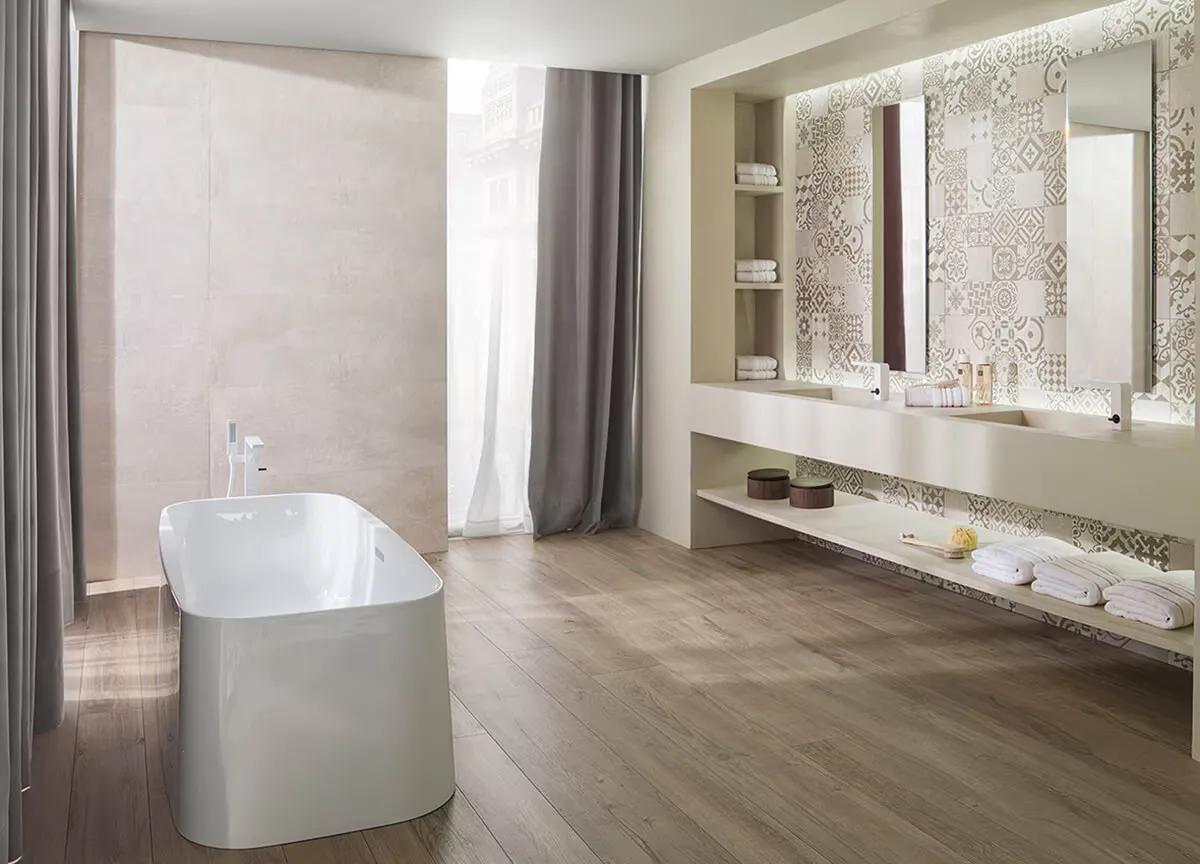
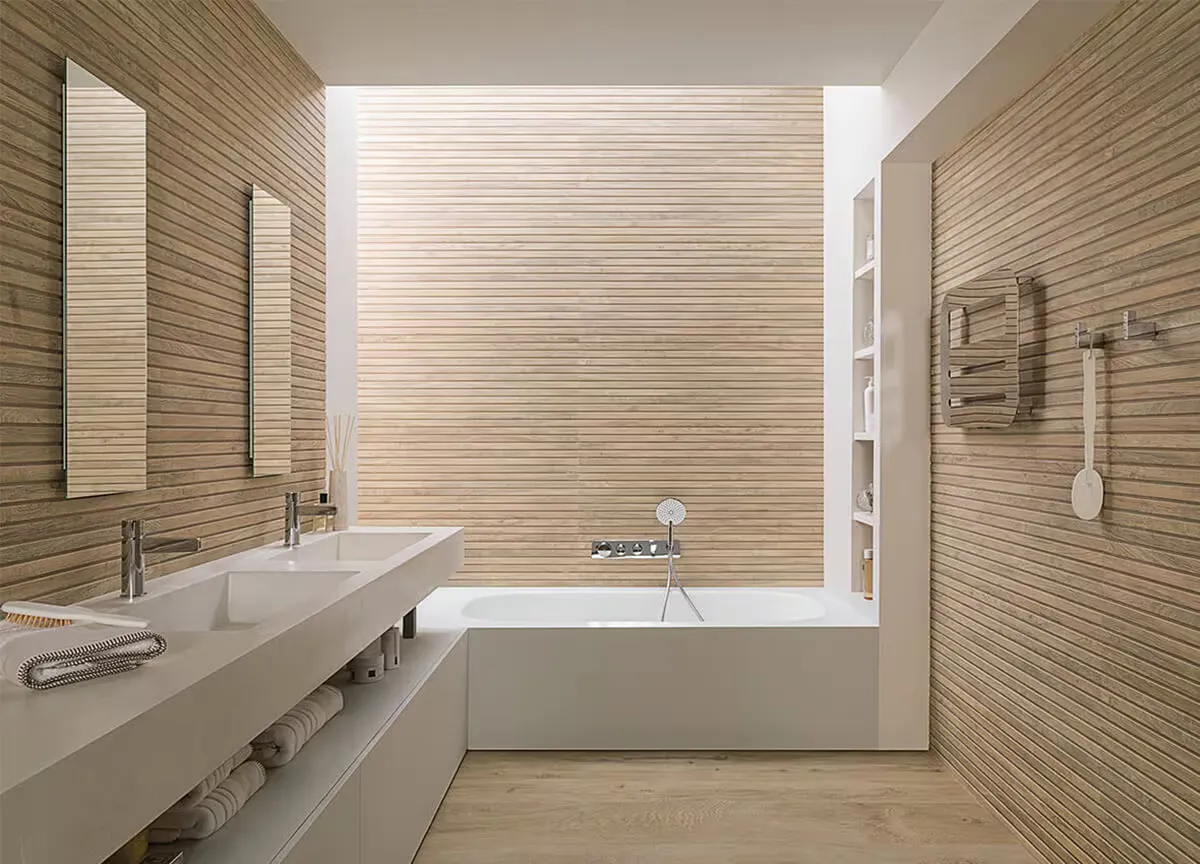
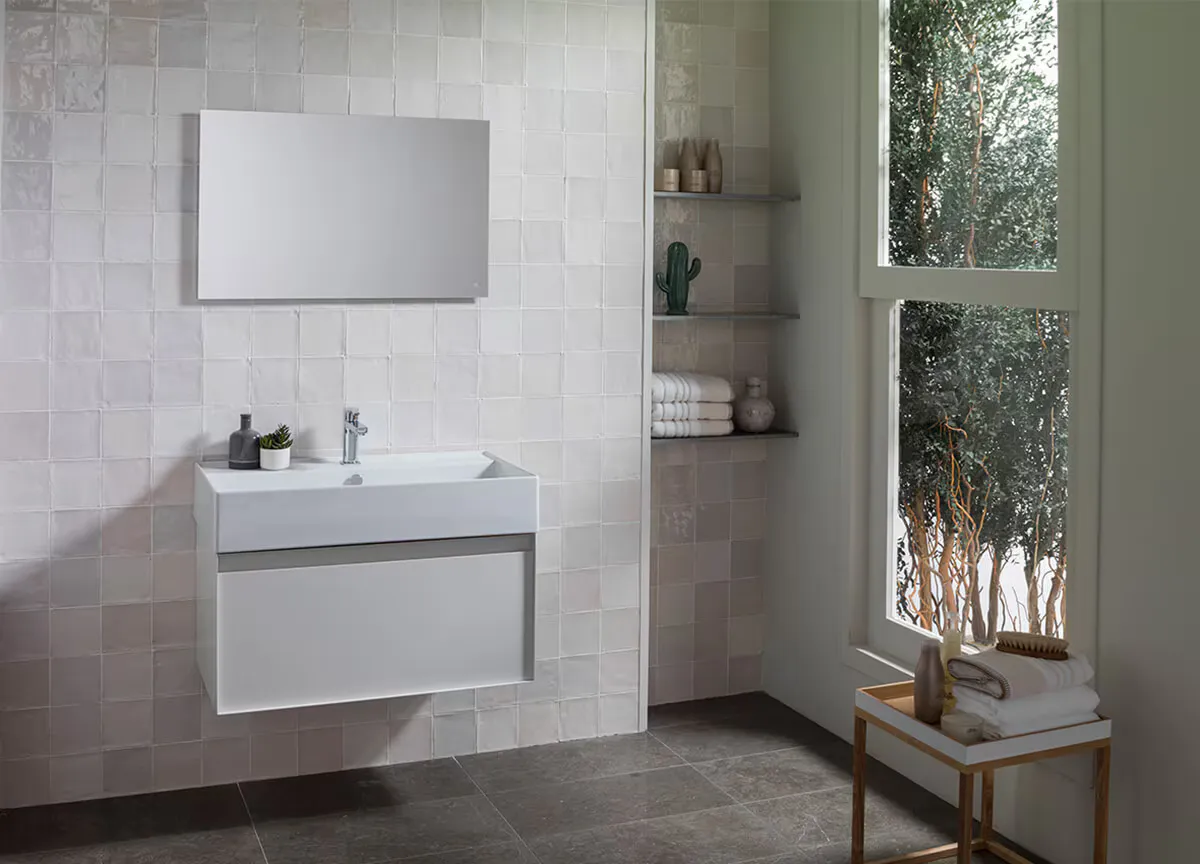
Wall hung or floating wash hand basins provide the ideal location for storage underneath (towels, bathrobes, slippers, etc.) where items can be kept dry and handy. The floating shelf can either occupy the space directly underneath or extend beyond for more flexible storage requirements. Match the colour/material of the WHB or else create a contrast with wood or other material.
#02 Decorative shelving
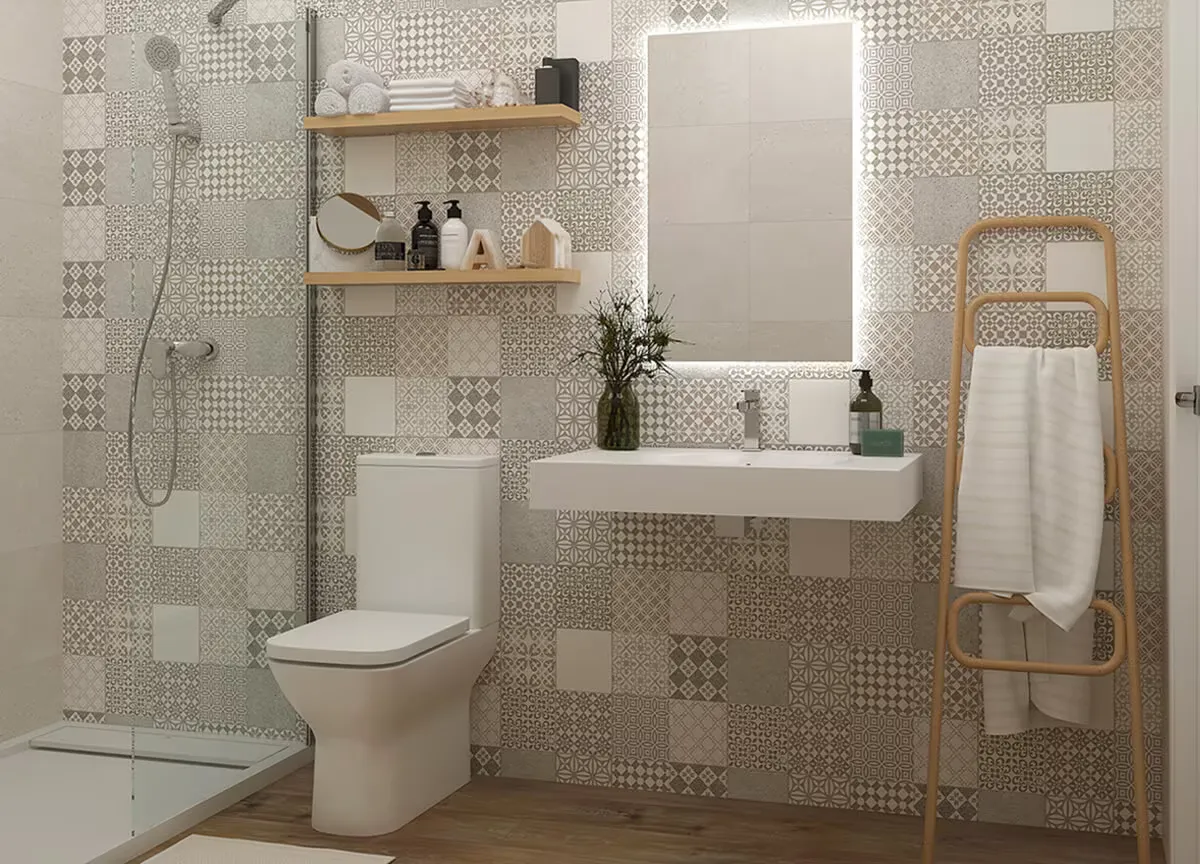
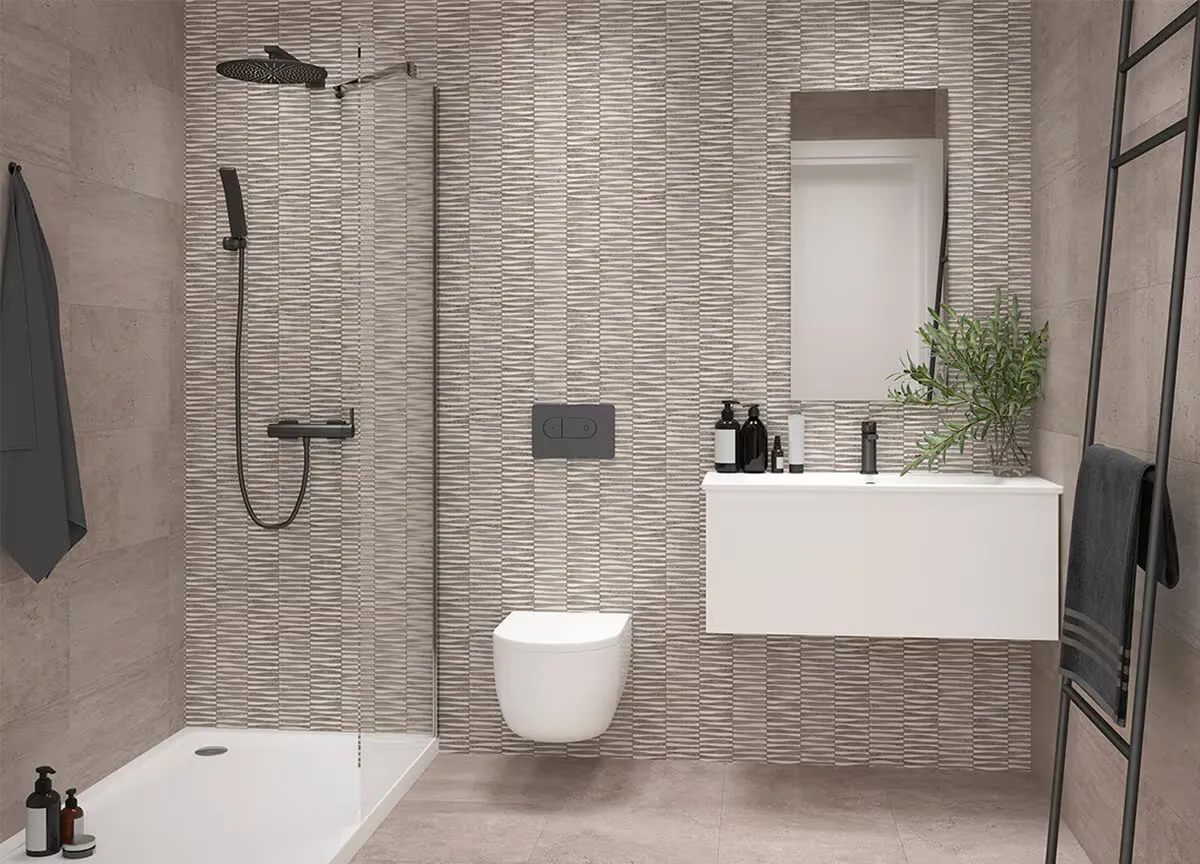
A decorative object such as a rustic timber ladder or a metal frame with rungs leaning against a wall is another floating shelving option. It is an ideal storage solution for reading material, towels, bath mats etc. The added advantage is that it is not fixed to the wall, making it easy to move. Also, wood lends warmth and is an ideal complement to a pristine wall and floor tiling. Metal, on the other hand, adds an industrial feel.
#03 Bathtub caddy
There is something wonderfully luxurious and self-indulgent about a bath. Add a caddy and the experience becomes even more enjoyable. Keep scented candles, books or a back scratcher in the bathtub caddy for the optimum bath time. Avoid placing anything electrical near bathwater.
#04 Floating benches and stools
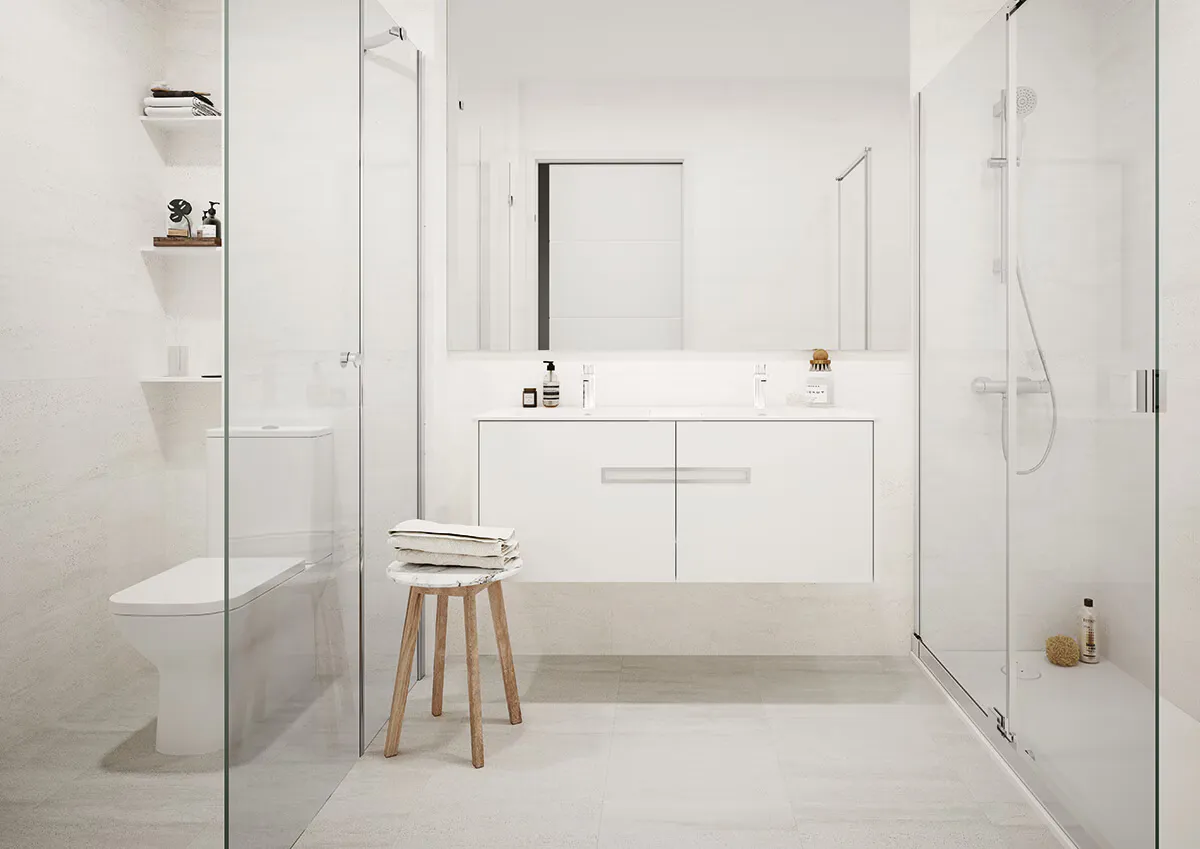
Having a bench, stool or chair in the bathroom is a welcome touch of comfort. When not in use as a bench, a deep floating shelf, raised about 18 – 20 inches (46 – 51 cm) above floor level, is also an ideal surface for storage. For comfort, it should be 15-20 inches deep (38 – 51 cm). The bench can be adjacent to the wash hand basin and become an extension of a shelf beneath. Alternatively, a simple water-resistant stool (treated wood or galvanised metal) can be added and used as a surface for storage when required.
#05 Corner shelves
Generally, bathrooms, especially courtesy bathrooms, are small in area – so every square inch counts. A great way to help get more out of the space is to exploit the corners for storage. A quadrant shelf or a bracket supporting a fitted corner shelf will lend a designer touch. It can allow for a larger washbasin or vanity unit, which helps in a practical way and makes the bathroom appear more spacious.
#06 Shelves with brackets
Take full advantage of the bathroom ceiling height by fitting shelving supported on brackets at a high level. This is particularly useful for storing bulky items seldom used. Meanwhile, frequently used items should be placed at eye level, on hooks and hangers below. Timber shelves with metal brackets are a neat and straightforward solution at any height.
#07 Shower recess and shelves
Make the architecture of the room work for you when it comes to storage. Provide a recessed shelf within the shower cubicle and match the finish with the surrounding wall treatment. Add floating shelves within the confines of the niche to increase its storage capacity. It provides a handy area to place shampoos, soaps and other personal grooming products.
The classic metal frame basket suspended from a shower head is another option for items used daily. On the other hand, for those items that need protection from splashes of water (towels, for example), add a floating glass or metal shelf at the end opposite the showerhead, thus preventing them from getting wet.
#08 Matching vs contrasting materials for bathroom shelving
Floating timber shelves can add a warm contrast to tiled bathroom walls. For bathroom shelving that matches sanitary ware white floating shelves look good above or below WCs, wash hand basins, baths etc. Floating metal boxes are another elegant option that can be grouped or fixed as a single shelf where required.
#09 Available leftover surfaces
Window ledges, shelves over WC cisterns and bathtubs, mantle pieces and areas on either side of a wash hand basin also present storage opportunities. Store anything with attractive packaging or decorative objects there to draw the eye.
#10 Small is beautiful
Elements like hand soap and toothbrushes can have their own bespoke shelves in the bathroom. Place where required and choose pieces that enhance the overall bathroom décor. This approach can look very elegant if done in a restrained way.
This guide might help you when considering ways to redecorate or design your small bathroom.
Bathroom shelves: most suitable fixing methods
Traditionally, floating shelving was fixed to walls on brackets. Nowadays, other options might be more suitable for the décor you are trying to create. They can be suspended from the ceiling or fixed with cables. Invisible wall-mounted brackets – hidden inside the shelves – are another option. While those that occupy the entire width of the wall recesses, a wooden profile at each end will suffice.
Nazari Ifrane 11.5 X 11.5 (Available in-store)
FAQs regarding bathroom shelves
How to style bathroom shelves?
How to style bathroom shelves?
Shelving works best aesthetically when it displays a variety of objects grouped together. It can be a combination of several items, such as cosmetics, grooming products, hanging plants, decorative objects or framed photos. Objects often used in the bathroom are more or less the same size and fit nicely next to one another.
How to organise bathroom shelves?
How to organise bathroom shelves?
Grouped shelves tend to look more stylish rather than a single shelf alone. Arrange them in a vertical column over one another or slightly offset for a more contemporary look. Remember to avoid those that represent a hazard, i.e. banging heads or catching on clothes. They should also be positioned in accessible areas where they can be of most use.
How deep should bathroom shelves be?
How deep should bathroom shelves be?
As a rule, bathroom shelving should measure 10 inches (25 cm) in depth max. However, for items like folded towels, more depth is required. These floating shelves should be placed at a lower level. The dimensions of decorative shelving and bespoke shelves for soaps and toothbrushes should match the available space and the items to be stored. Shelving placed over the WC should be no wider than the cistern for close coupled toilets.
Can you put wooden shelves in a bathroom?
Can you put wooden shelves in a bathroom?
Yes, just as bathrooms can have wooden floors and timber furniture, bathroom shelving can be made from wood. But most importantly, the wood must be treated.
What material is best for bathroom shelves?
What material is best for bathroom shelves?
The bathroom is a humid environment, so the choice of materials for shelving must reflect that reality. Popular choices are metal, glass and wood. Metal must be galvanised to protect against corrosion. The process involves dipping the metal into a zinc bath. And timber must also be sealed and treated to help protect from moisture. There are three main ways to do this: paint the wood with varnish; use a water sealant or rub it down regularly with oil. Glass, on the other hand, is perfectly waterproof. However, it must be laminated to prevent accidents in the case of breakage.