Japandi bedroom ideas: décor for sleeping better
Presenting Japandi bedroom ideas, the perfect mix of Japanese Zen and Scandinavian contemporary design for the bedroom.
Want to find out how décor can help you sleep better at night? And help keep you calmer when awake? Then our guide to Japandi bedroom décor has the answers. We have put together a guide and collected the following tips to help change the way you sleep, so read on.
Advance 1L Natural Wood 18X220X1.1 (Available in-store)
Japandi style bedrooms
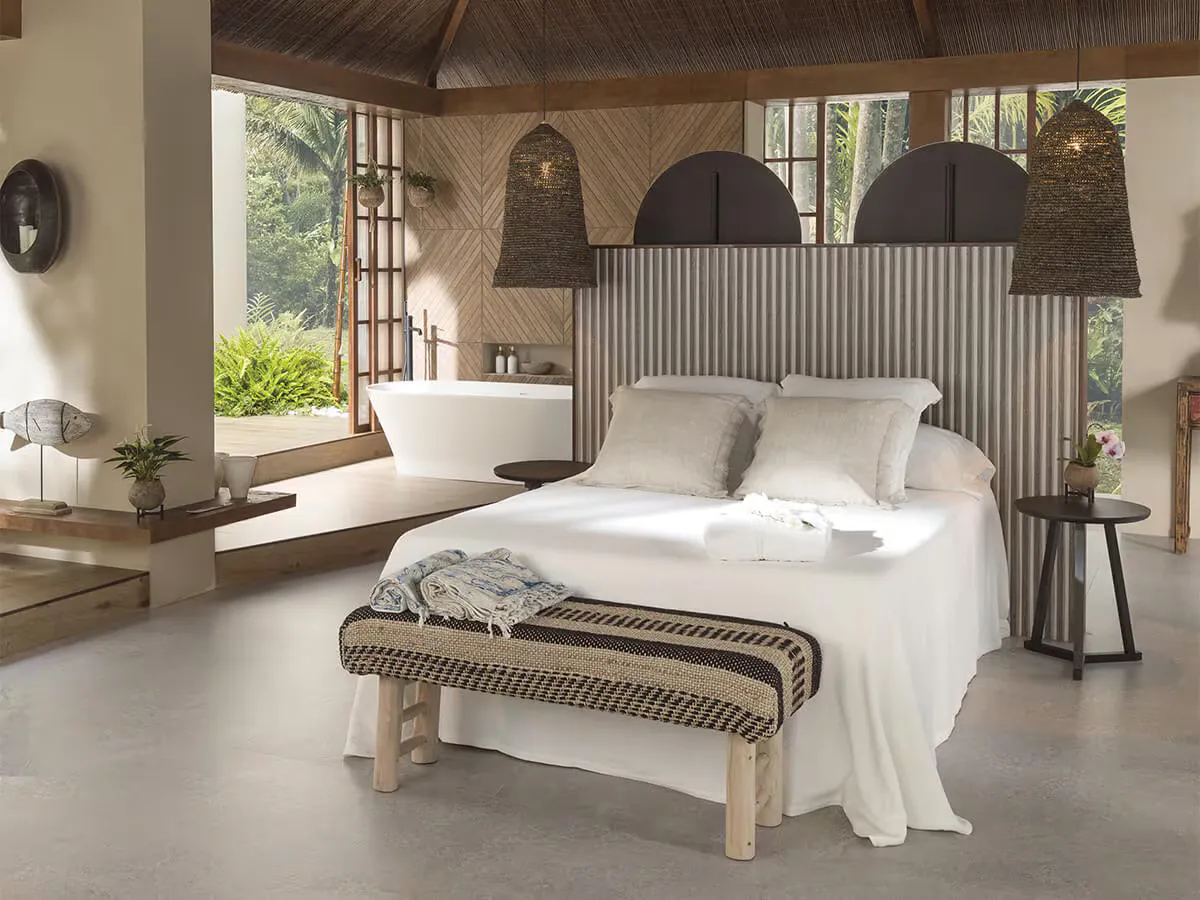
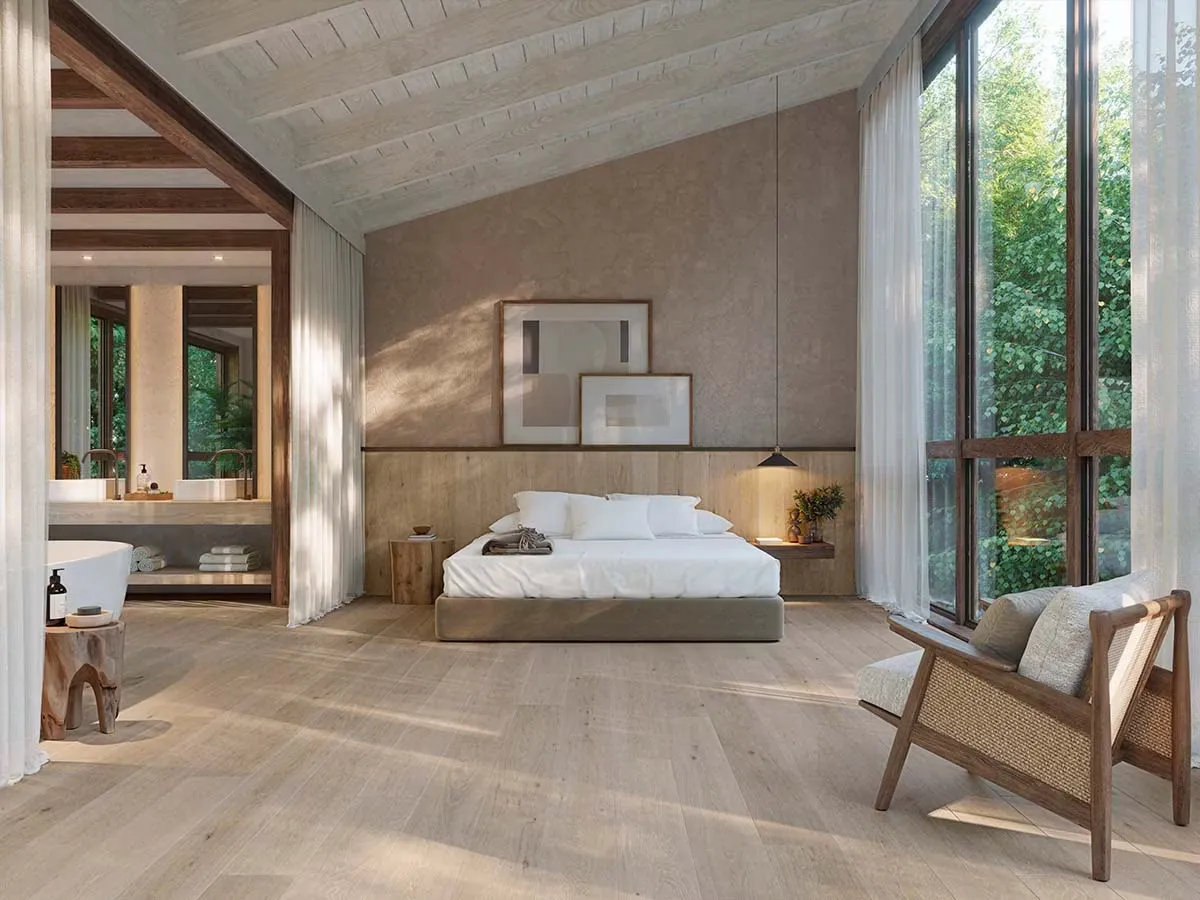
The term “Japandi” references a combination of Japanese and Scandinavian design influences. Together they conjure up images of a minimalist, rustic, aesthetically pleasing but above all functional décor. The Japandi style focuses on natural materials, muted colours and clean lines and creates a sense of well-being.
This increasingly popular style décor is ideally suited to bedrooms. Not surprising given Japan’s fame as the Land of the Rising Sun and the typically Scandinavian association with all things natural and wholesome. It is, indeed, the territory occupied by the bedroom; daybreak, regenerative sleep, health, light, etc.
This article examines how to apply Japandi style criteria to the typical elements of bedroom décor: floor tiles, wall finishes, furniture, accessories and lighting.
Minnesota Ash Porcelain Tile 25X150 (Available online & in-store)
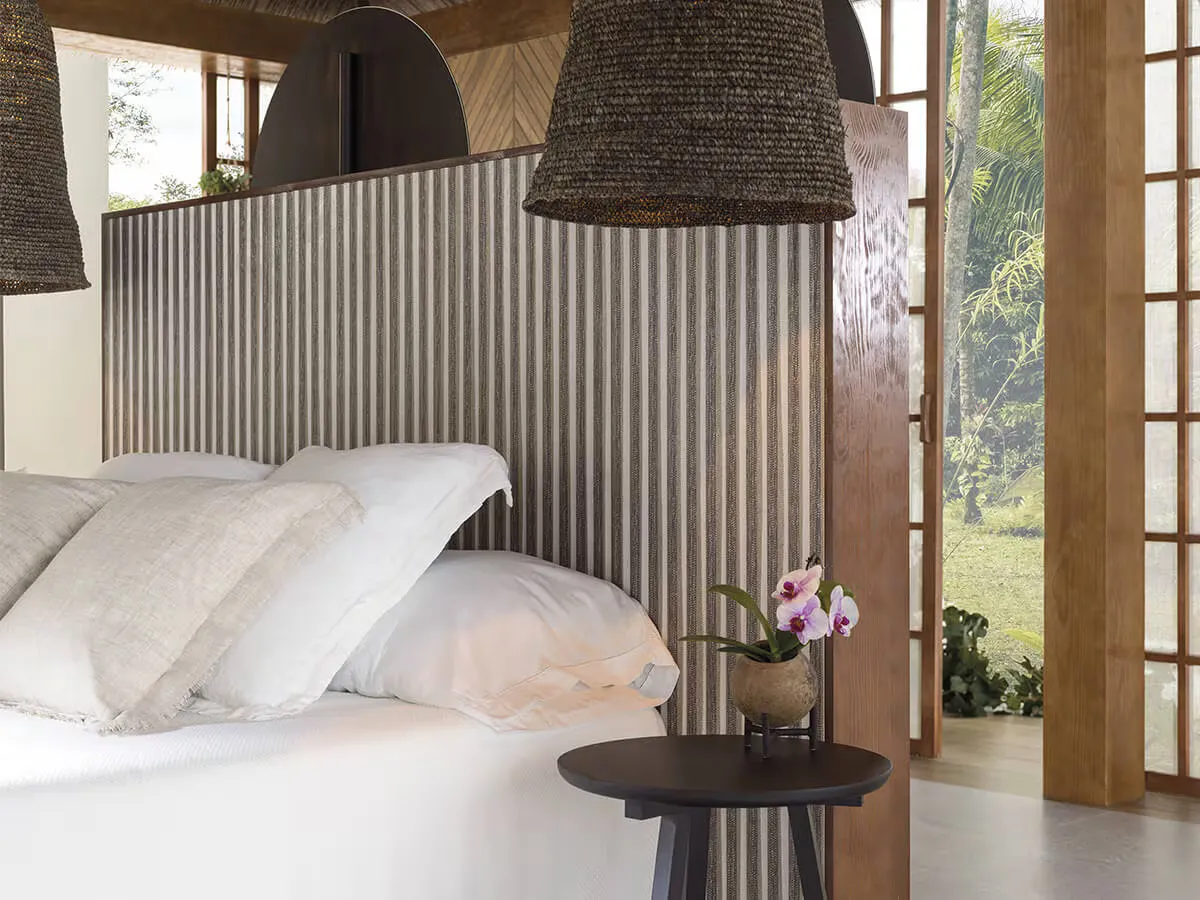
The Japandi bed
How best to recreate this style in your bedroom? The first step is to get the bed right, as Japandi style starts with a good night’s sleep. The bed deserves its own dedicated section because, at its core, Japandi is a functional style.
- Spend money on a high-quality mattress, one with a firm base and, if possible, natural stuffing material.
- Organic bed clothes represent a worthwhile investment. Organic fabrics like cotton and linen regulate body temperature and humidity naturally.
- Find pillows that best suit your preferences when it comes to either soft and fluffy or increased neck support.
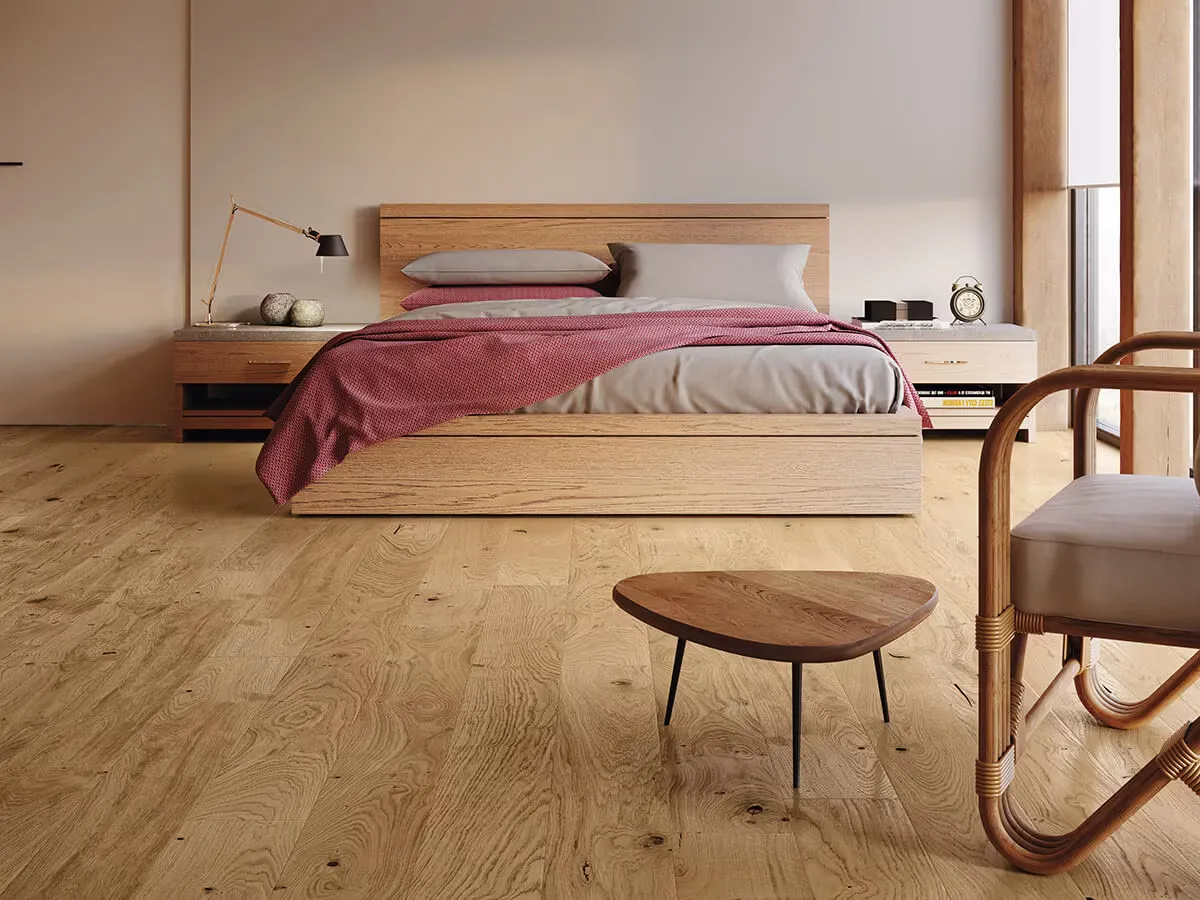
- Under-bed storage is an ideal way to achieve a minimalist look. You do not have to get rid of your possessions; just store them under the bed. That is how simple the Japandi style is.
- Size the bed correctly for the space available. Do not be too ambitious or mean with the bed dimensions. Aim for the Goldilocks principle – ‘just right’.
- Place the bed with the other elements of the room in mind. Avoid the bed directly facing the access door. If possible, position the bed to take advantage of any views or a favoured piece of art. See here for tips on how to place your bed according to feng shui principles.
- Create a feature with the headboard for freestanding beds; it can also function as a storage unit. Incorporate a reading light at the height that best suits you and/or upholster with organic fabrics.
► Important: The above advice applies to any style of bedding, no matter what style décor.
Hannover Topo Porcelain Tiles 120X120 (Available in-store)
Japandi design
Well-being is a mental state as well as a physical one. Above all else, the Japandi bedroom is about harmony, calm and order expressed through surroundings. This is made possible through the careful construction of an environment that includes all the senses.
- Touch. The bedroom is an ideal place to mix textures, as most of the time we spend there, we are in the dark. Bedding, flooring, soft furnishings should be considered from a tactile as well as visual criteria. Crisply laundered bedsheets against the skin, deep pile rugs underfoot, velvety curtain fabrics… These are sensations that words cannot describe. They must be experienced.
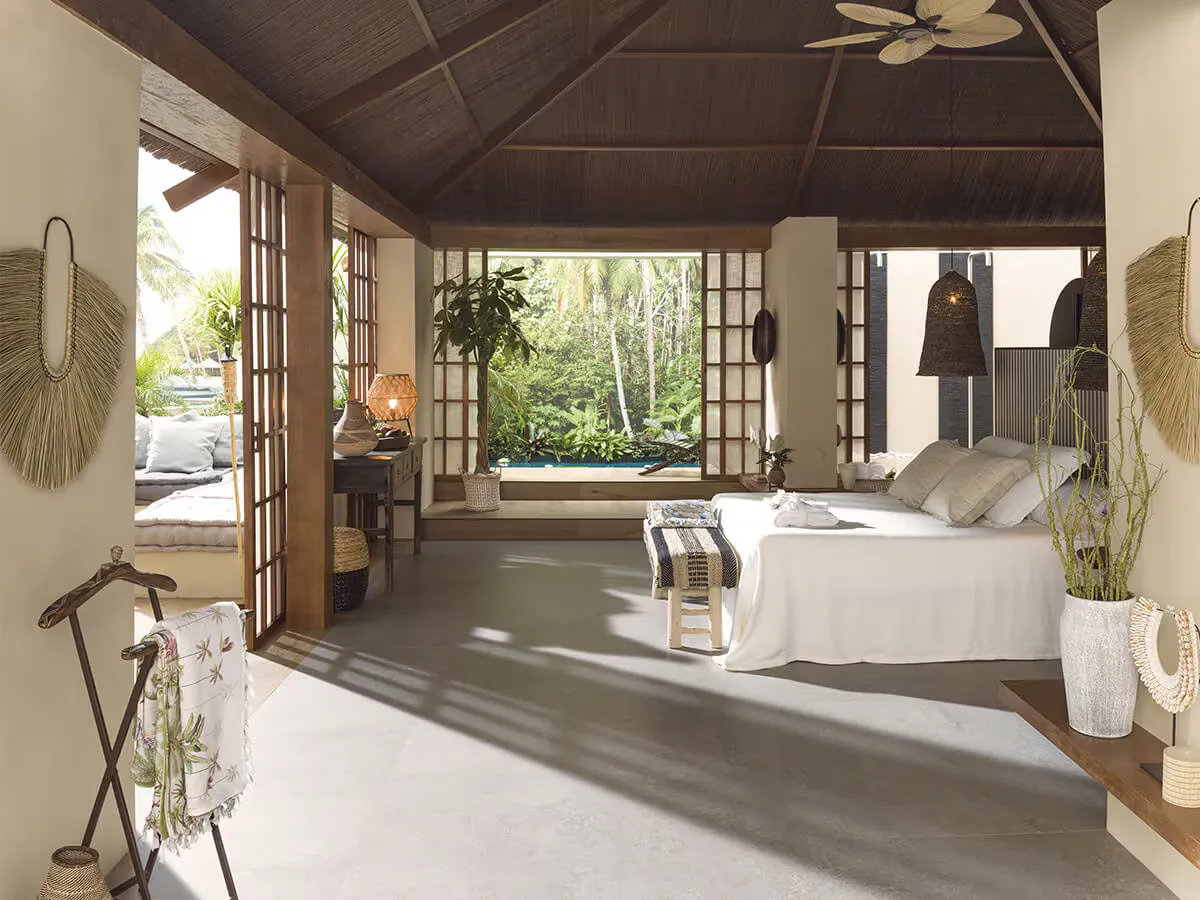
- Smell. Scented candles and home perfumes represent another facet of Japandi style in the bedroom. As for accessories and furniture materials like cane, esparto, reed, raffia have their own aroma that recalls the outdoors and subconsciously transports us back to nature.
- Sounds. Having very subdued background sounds can aid sleep, but it must be continuous. A fish tank, white noise, birdsong or whale song recordings can relax and soothe the soul before dropping off to sleep.
- Sight. Natural light is a fundamental element of the Japandi style. Make the most of any potential light source. For window treatments, use a lightweight fabric for privacy or bamboo blinds. Artwork should be personal and used sparingly. Place them in areas that catch the light or illuminate them artificially.
Japandi furniture
Apart from the bed, it is a good idea to keep other bedroom furniture simple. The arrangement of the furniture is almost more important than the individual pieces. Do not crowd the space and scale the furniture pieces to your liking. Feature a mix of traditional and modern bedroom pieces; a timber chest to store bedding; a chesterfield armchair as a clothes horse or reading area; a vintage light fitting for ambient light; a contemporary dressing table, and so on.
Devon Riviera Porcelain Tiles 29.4X180 (Available in-store)
Japandi bedroom design
The following is a rough guide to the staples of the Japandi style décor. As said before, even though it has influences of minimalism, the Japandi style does not require emptying our bedrooms of our possessions. It is more about establishing order, choosing certain materials and working with what we have already got.
#1 Japandi colour scheme
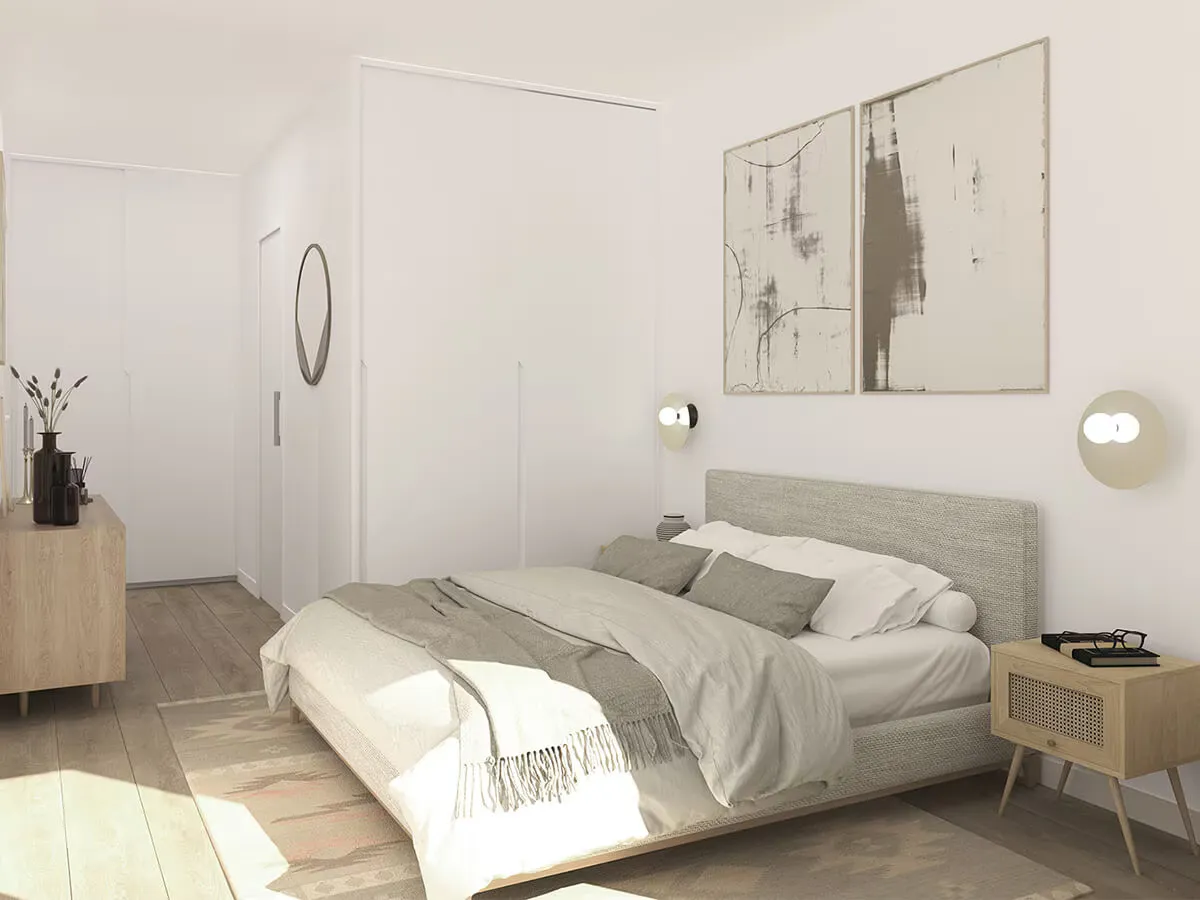
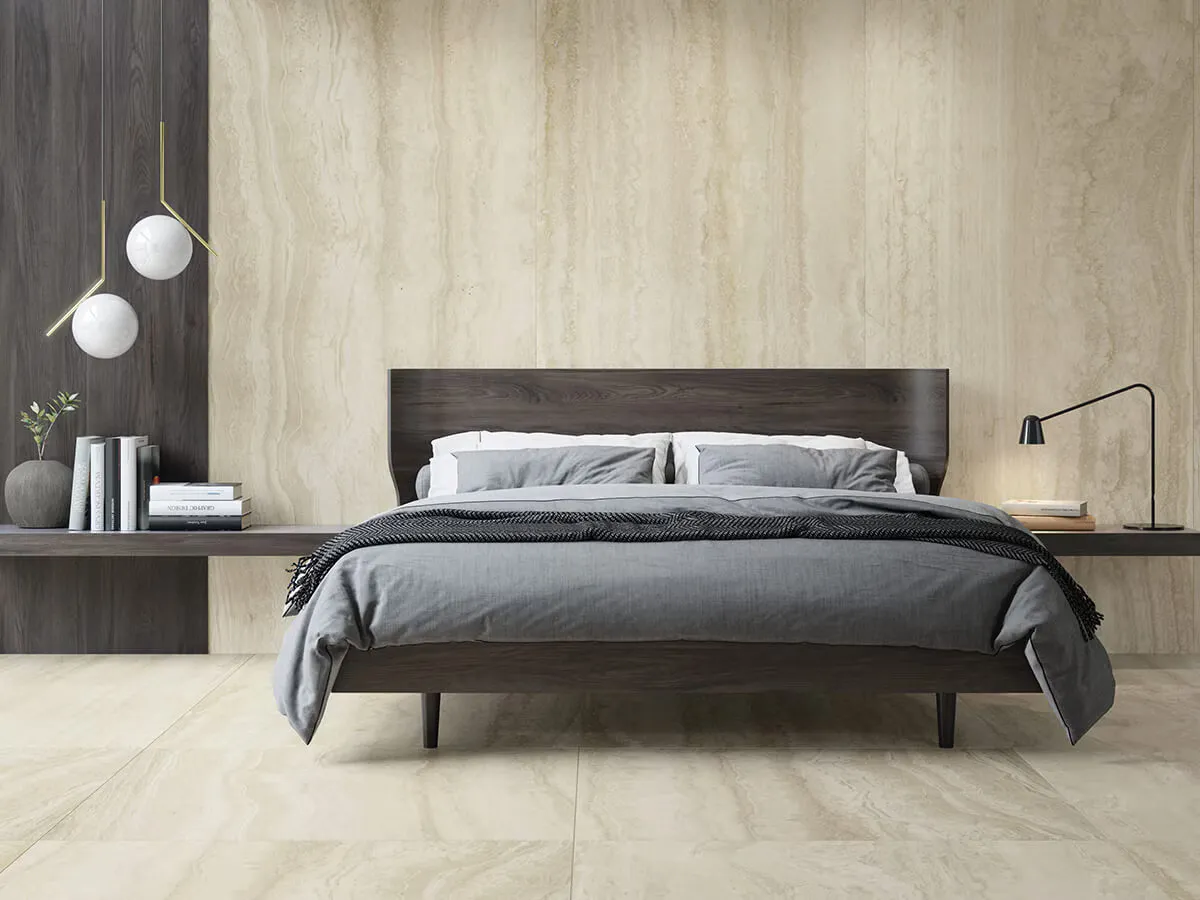
If only one design decision can be made to achieve the Japandi style, it should be colour. White, grey, light pastel shades or neutral colours are the optimum palettes for creating the Japandi effect. Reflecting all available light into the room and evoking a sense of optimism and calm.
#2 Bedroom layout
Getting rid of clutter is a condition of the Japandi style. However, this does not mean that you have to get rid of everything. Just be smart about storage. Choosing built-in wardrobes instead of walk-in closets or beds with drawers underneath instead of freestanding beds are just some storage solutions that might work. See here for tips on optimal bedroom storage.
#3 Plants& flowers
It is a proven fact that certainplants remove toxins from the air. They also replace carbon dioxide with oxygen. The same effect is achieved with cut flowers but with the added fragrance and colour that only fresh blooms can provide.
#4 Natural materials
Wood, organic fabrics, cane, ceramics… are ideal materials for the Japandi style bedroom. They represent a way of decorating the space without the need for anything else added.
#5 Simple lines
Clean lines and silhouettes for furniture and fittings are highly recommended. Symmetry is desirable for individual pieces, but these can be organised in a free-form or asymmetrical layout. Japandi style celebrates the perfection of imperfection, so avoiding total symmetry is, in fact, more faithful to the Japandi style.
Tivoli Beige Nature Large Format Porcelain Tiles 120X250 (Available in-store)
FAQs
What is Japandi interior design?
What is Japandi interior design?
Japandi style represents a mixture of the minimalist style of Japanese design and the mid-century modernity of Scandinavian design. These are two mutually complementary styles because they go to the root of what design is. A holistic lifestyle and design philosophy regarding the world around us, which is expressed through physical matter.
How to decorate Japandi?
How to decorate Japandi?
Apart from the colour scheme, which has already been discussed (see above), the next most critical element is the choice of materials. Timber for furniture and flooring, or timber effect is a great starting point. Use scatter rugs in wool to add extra warmth. Cane, rattan and reed make a remarkable contribution to the organic feel of space if incorporated into light fittings, accessories and other decorative elements. Artworks should be sparse because the whole room is considered the artwork through its configuration and decoration.
Why is the Japandi style appropriate for the bedroom?
Why is the Japandi style appropriate for the bedroom?
Warmth, calm, harmony and cosiness are all words to describe the Japandi style. These also happen to be the best description of the ideal ambience we want in the bedroom. Because of the intimate nature of sleep and its importance in our well-being, the combination of nature and Zen philosophy creates the ideal conditions for restful sleep.