The Classic & Timeless Elegance of Parquet Flooring
Few finishes deliver such a powerful punch in home décor as parquet flooring. Bringing together the organic beauty of wood with skilled craftsmanship, parquet oozes sophistication and elegance.
Any room in the home, from an open-plan living area to a cosy bedroom, is elevated by parquet flooring. The sensual qualities of real wood are unmistakable. Parquet feels warm underfoot, exudes a characteristic perfume and absorbs sound, adding unique environmental comfort.
Parquet floors are designed for the long haul; they represent an investment that adds value to the home. Moreover, these floors allow sanding and varnishing over their lifetime. This ensures longevity and a good return on investment.
Through this article, we will look at the why and where of parquet flooring. We also include ideas on emerging trends and how to get the best from parquet around the home.
Classic 1L Herringbone Camel 13×72.5 cm
What is Parquet Flooring and Where did it Originate?
Parquet flooring is a type of floor finish composed of individual timber sections that creates an opulent decorative effect. These timber sections, sometimes known as blocks, tiles or strips, are arranged in geometric compositions. Hence, the patterns can be quite elaborate or simplified. Nevertheless, the look is unmistakable, parquet flooring elevates any interior and has been a favourite of architects and designers since the 17th Century.
In fact, the origins of parquet flooring date to the Palace of Versailles, when the elaborate floors favoured by the French aristocracy featured marble. For practical reasons, timber came to replace the marble.
The word parquet derives from the French term, parc, meaning “a small enclosed space”. The term perfectly describes the overall effect of different patches of timber organised into a whole. In the past, it was a great way to calibrate and define large spaces by adding a human scale. Today, it’s a way to add character to the home with an unmistakable stamp of quality.
Treville 1L Suede 13×109.2 cm
Parquet Flooring Installation
Traditionally, parquet wood flooring belonged to the wealthy and their stately homes. Each section of timber was laid by hand in a laborious process. Nowadays, however, with modern manufacturing techniques and parquet flooring tiles, it’s more affordable and easier than ever. The two most common options in parquet are either solid or engineered:
Solid Parquet Flooring
The flooring is made up of small sections of real timber, usually a species of hardwood. The wood can be refinished over its lifetime and varnished or treated to create a very different effect. Solid wood, however, is more prone to expansion and warping due to humidity and temperature variables.
Engineered Parquet Flooring
Different layers of plywood are bonded together with a real timber top layer. Engineered parquet provides better resistance to moisture and temperature fluctuations. The other main advantage is cost, as it’s significantly cheaper. However, it has a more limited lifespan compared to solid timber.
Classic 1L Herringbone Natur 13×72.5 cm
The Advantages of Parquet Flooring
There are several advantages to parquet flooring beyond its visual appeal. Although that is one of its most attractive features. Like any other natural material, there is a distinctive tactile sensation that is unmistakable. Parquet is part of the biophilic design revolution, which emphasises organic materials such as wood in home décor for optimum wellbeing. Other advantages include:
- Durable: Hardwoods are among the most indestructible construction materials. If maintained properly, a parquet floor should last a lifetime and beyond. That makes it a great investment and adds real value to the home.
- Versatile: Parquet flooring patterns can be as elaborate as marquetry or as humble as parallel strips of timber laid side by side. The range of timbers is equally diverse, from indigenous species to more exotic hardwoods.
- Maintenance: Keeping parquet flooring looking pristine is relatively straightforward. Regular sweeping and mopping down every now and again with a damp cloth will suffice.
- Low Allergen: Compared to carpet, parquet does not accumulate allergens to the same extent. The smooth finish facilitates easy maintenance with fewer areas for dust to settle.
Classic Ebano Luxor 39×39 cm
Popular Parquet Floor Patterns
Parquet flooring can be a simple pattern of parallel floorboards laid side-by-side with staggered joints. However, its beauty lies in the more complex designs that have been developed over the centuries. The following examples of flooring patterns are the standard parquet options. They lend a sense of static movement within a room and can create a visual perception of larger dimensions.
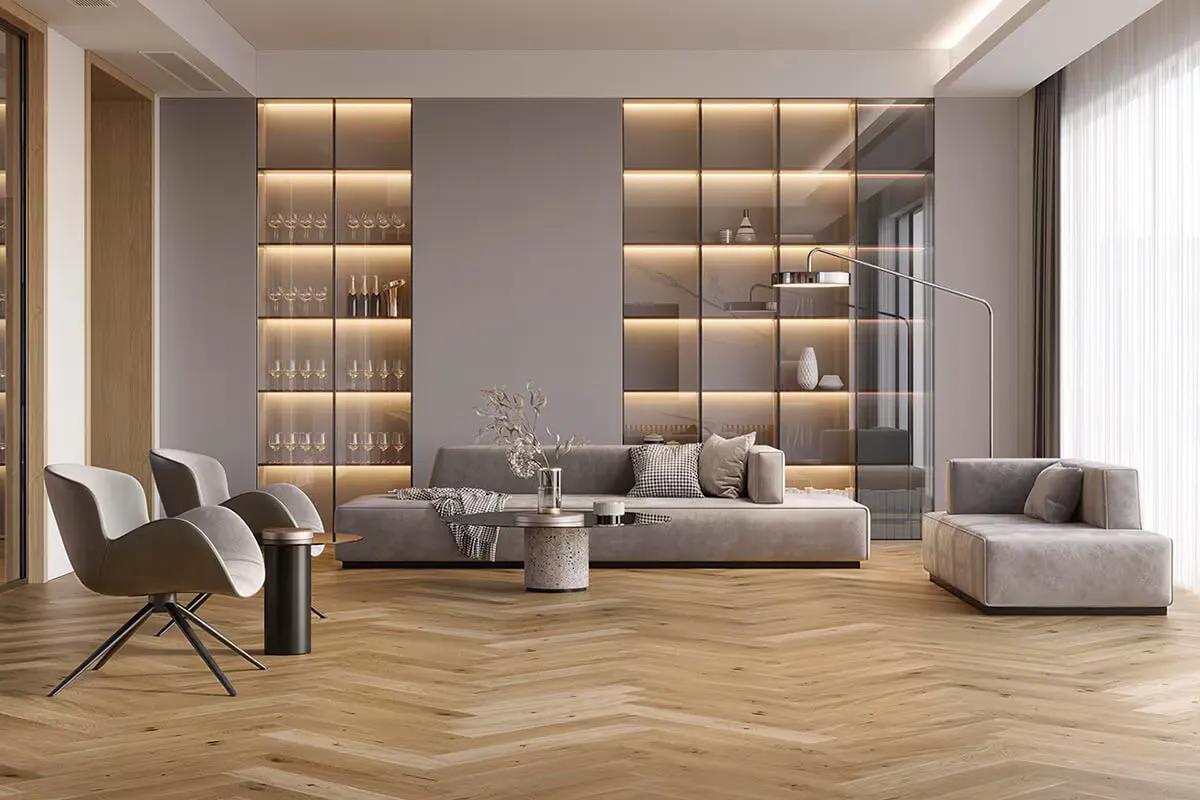
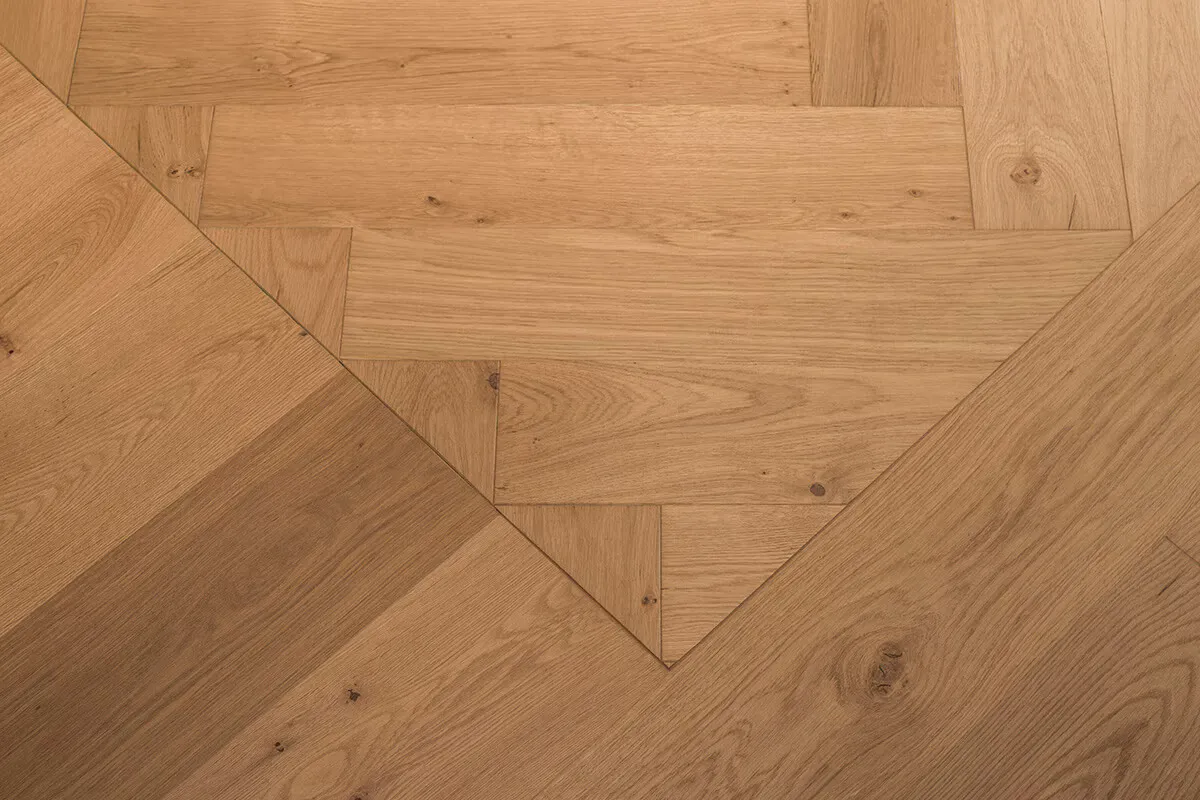
- Herringbone: The timber planks are organised at 45 degrees and slot together at their ends to create a zig-zag effect. The diagonal composition provides visual interest and directionality across a room.
- Chevron: Similar to Herringbone but with the ends of the planks cut at a 45-degree angle. The panels of parquet fit together along a straight line while combining a diagonal and orthogonal geometry.
- Versailles: A much more intricate pattern of squares, rectangles, triangles and diamonds set within a square or rectangular frame. Named after the complex floors of the Palace of Versailles, where the style was first installed.
- Brick Bond: Parallel sections of timber slats are laid out in alternating horizontal and vertical floor panels. Typically, the panels measure the same width, creating a square pattern which looks simple but attractive. Also known as mosaic.
- Chantilly: Resembles a chessboard with a framework of squares within an overall grid. More suited to larger spaces of generous dimensions.
- Basket Weave: The timber planks are laid in a criss-cross fashion, creating a weave. There’s a solid panel of timber in the centre, while the adjacent planks appear to go under or over each other. The pattern adds depth and texture to flooring.
Forest 1L Nude 18×220 cm
Forest Herringbone Nude 12.7×63.5 cm
How to Choose a Parquet Flooring Pattern
Once you decide on installing a parquet floor, the next question is which pattern will work best. That depends on a number of factors, not least of which is the style of your home décor.
A lighter colour timber Chevron pattern is the perfect floor for a Scandi-style living room. The diagonal lines add a subtle texture that is best complemented by off-white upholstery and neutral walls. For a moodier statement floor in a period-style property, the Versailles parquet pattern adds a classic flourish. Alternatively, a simple brick bond parquet pattern adds character to a cosy contemporary style bedroom floor in lush honey tones.
Clearly, then, the choice of pattern (and the type of wood) makes an impact on the style you want to create around the home. The following criteria will help you decide what works best for your home.
1. Room Dimensions
Start at the beginning, the perception of space can be very different depending on the parquet pattern. For a small space, a diagonal pattern should be laid at right angles to the longest wall. The effect helps to open the space and make it seem larger.
For a larger space, on the other a Chevron or Herringbone pattern adds character without the clutter. Always consider the position of the furniture in a room, arrange the pieces to highlight the parquet below and make it visible.
2. Type of Wood
Darker woods evoke a sensation of enclosure. Walnut, dark oak and mahogany are dramatic choices which would have been used for library spaces and studies in the past. Maple and ash have a much more contemporary vibe and are suited to large living rooms with abundant natural light. The same goes for the wood grain; some timbers are uniform and even, while others are bolder where the grain becomes part of the pattern.
3. Natural Light
You also need to consider the orientation of a room and the size of its windows. If there is a lot of sunlight, the pattern will be much more obvious and add to the décor. For darker spaces, the floor tends to take on a secondary role; a simple straight pattern helps to create a calming and relaxing ambience. Remember that timber is an organic material and will discolour slightly under direct sunlight.
4. Maintenance
Be mindful of the wear and tear on the flooring. For heavy traffic areas, the choice of wood and the finish will help to reduce maintenance. Choose hardwood species that are resistant to scratches and knocks.
What are the Differences between Parquet and Laminate Flooring?
Nowadays, it’s hard to distinguish between a high-quality laminate floor and a natural parquet floor. That’s because, unlike the laminate floors of previous decades, today all the materials in laminate flooring are also natural. Wood, paper and resin are combined with high-density fibreboard as the middle layer that provides weight and stability. The resin of the upper layer provides durability and moisture resistance, which makes laminate flooring suitable for kitchens and bathrooms.
Nevertheless, laminate cannot be refinished and is susceptible to scratches and scuffs. Consequently, parquet flooring will add more value to your home.
Classic 1L Herringbone Natur 13×72.5 cm
How to Lay Parquet Flooring
There are three different ways to install parquet flooring. To help you decide which works best for your project and budget, the following installation tips provide an overview.
Fixed or Glued-down method: The parquet is attached directly to the subfloor using an appropriate adhesive. This method provides a very stable and durable floor that will last and last. However, installation is labour-intensive, and if the planks get damaged, replacing them can be complicated.
Floating method: The parquet lies on top of an underlay with no need for adhesive. Installation is simpler due to the subfloor is completely level and clean. However, you should leave a gap around the perimeter of the room for expansion.
Click-system: A variation on the floating floor featuring a tongue-and-groove mechanism. The planks simply click into place, so there is no need for adhesive or nails. Popular with DIY enthusiasts but unsuited to elaborate pattern parquet.
Forest 1L Nude 18×220 cm
Forest Herringbone Nude 12.7×63.5 cm
The Resurgence of Parquet Flooring
There is a renaissance in parquet flooring right now, and it’s not hard to see why. Parquet represents many of the qualities that designers value nowadays. It’s an example of responsible consumption because it can be restored and refinished over its lifetime.
Wood is a natural material which is self-renewing and eco-friendly. Consumers are increasingly choosing FSC-certified timber sources for home finishes such as parquet flooring. Furthermore, parquet patterns are highly adaptable, which ensures greater freedom to customise unique spaces in the home. Therefore, it suits both public and private spaces such as open plan living rooms, bedrooms and entrance halls.
Parquet Flooring Ideas
Parquet is a classic finish and never goes out of fashion. Nevertheless, there are always emerging trends that represent variations on the basic principles of parquet. One distinct advantage that parquet flooring provides homeowners is its compatibility with any style of furniture. As well as its capacity to integrate with a range of decorative styles. Contemporary trends in parquet are liberated from the rules of the past. Accordingly, here are a few ideas that are trending right now.
01. Colour Palette: There are many more colours and hues to choose from nowadays, from subtle and neutral to dark and dramatic. Play with different tones to suit your taste or mix-and-match to create a multicoloured effect.
Forest 1L Natural 18×220 cm
Forest Herringbone Natural 12.7×63.5 cm
02. Combine Patterns: There’s no reason why you should only stick to one parquet design. Even within the same room, you can customise a space by combining straight strips of wood with classic patterns like Chevron or Herringbone. The result looks modern and also helps to zone or define different areas of a living room.
03. Noble Materials: Oak parquet flooring is having a moment right now in designer circles. The rich tones and grain of oak are visually striking and make a bold statement in living room décor.
04. Entrance Halls: Nothing makes such a good impression as parquet flooring to welcome you (and visitors) home. Remember, hardwood parquet performs excellently in areas with heavy foot traffic.
Forest 1L Natural 18×220 cm
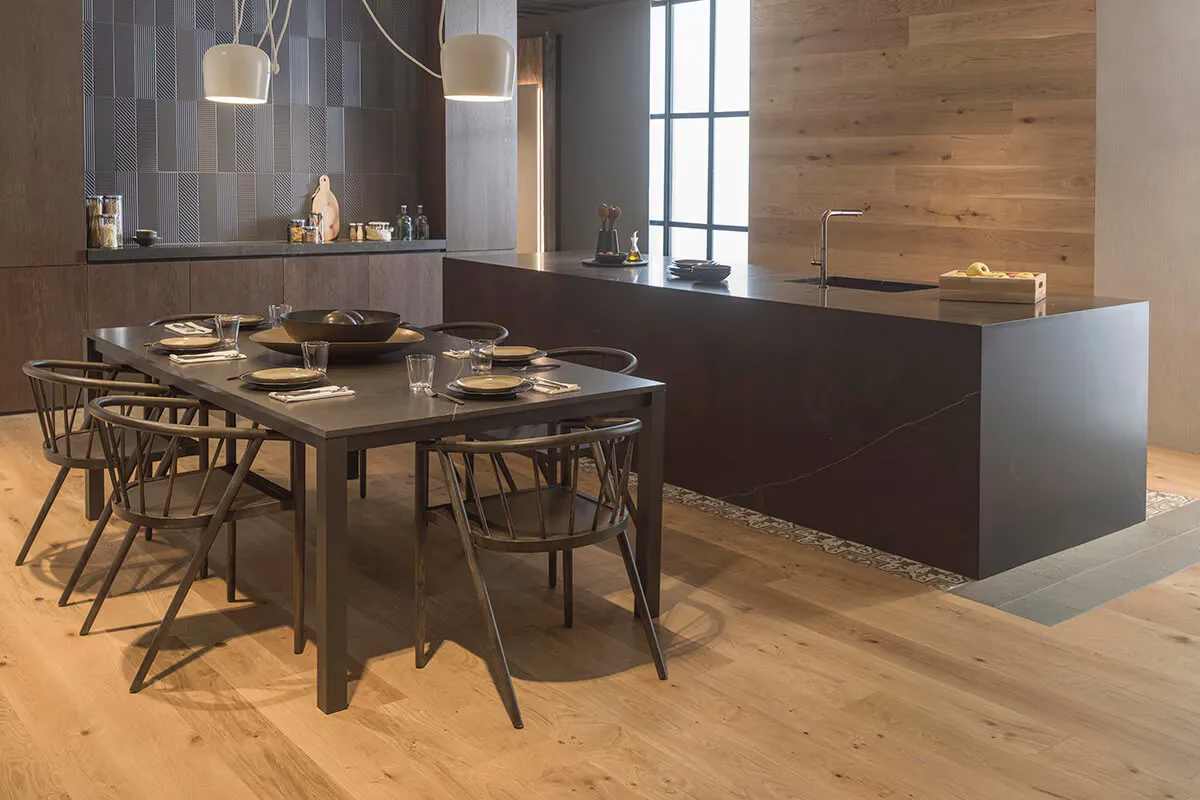
05. Mixing Materials: Combine parquet flooring with other flooring materials, such as ceramic, for an open plan kitchen-dining area. The ceramic is a practical finish for the wet area of the kitchen. Parquet provides a warm and elegant floor for a dining table and chairs.
Discover the Beauty of Parquet Floors
The potential of parquet to add timeless elegance to your home is limitless. So, we recommend making an appointment at your nearest Porcelanosa showroom to appreciate the variety of beauty of parquet flooring. Meanwhile, if you have any questions regarding the content of this article, drop us an email and we will get back to you.