How to choose between light and dark flooring?
The choice between light and dark flooring is one of the most confounding decisions in home décor. Both options evoke very different sensations and help create stylish, customised interiors.
Flooring either absorbs or reflects the light and therefore adds an unmistakable quality to an entire space. The look and feel of materials such as timber and porcelain add a timeless luxury to any floor. Thanks to improvements in manufacturing techniques, there are more varied options now than ever before to choose from. But the dilemma of choosing between lighter or darker flooring remains. We are here to provide helpful advice. Either light or dark flooring will bring out the best in every room of the home. And normally, the space itself will help you choose between one or the other. In this article, we are going to explain the criteria that will help you choose the right option.
What to Consider When Choosing Light or Dark Flooring
Porcelain represents a game-changer in contemporary flooring. Clean, pristine and effortlessly stylish porcelain tiles come in an infinite variety of colour tones. Similarly, timber flooring is one of the most versatile floor finishes. Rich, dark wood floors such as mahogany, walnut and teak give off a classic, sophisticated vibe. While lighter colours such as maple, birch, and pine exude a more modern Scandinavian ambience. The flooring is the foundation of any interior, and it also represents a significant investment. Therefore, you’ll want to ensure that your choice suits your lifestyle and home décor. The following criteria will help you decide between light and dark flooring:
- Wear & Tear: For floors with heavy traffic, darker finishes help to hide dust and dirt better. Along the same lines, darker timber is more resistant to scratches, rot, termites and sun damage.
- Room Size: As a rule, the lighter the flooring, the greater the sensation of space. This is also true in reverse, darker finishes tend to make large spaces appear more cosy and smaller.
- The Look: Everyone has their own personal preference when it comes to light or dark flooring. There is a gravitas to darker floors associated with grand spaces and libraries. Lighter floors tend to have a more modern appeal, especially with light grey flooring, for example.
- Budget: Nowadays, timber flooring is within the reach of everyone. Engineered and laminate flooring products feature authentic wood. Meanwhile, Luxury Vinyl Flooring (or LVT) is indistinguishable from the genuine article.
- Home Décor: You might have a family heirloom or existing piece of furniture that you want to match with your dark or light flooring. When choosing between one or the other, keep these favourite pieces in mind.
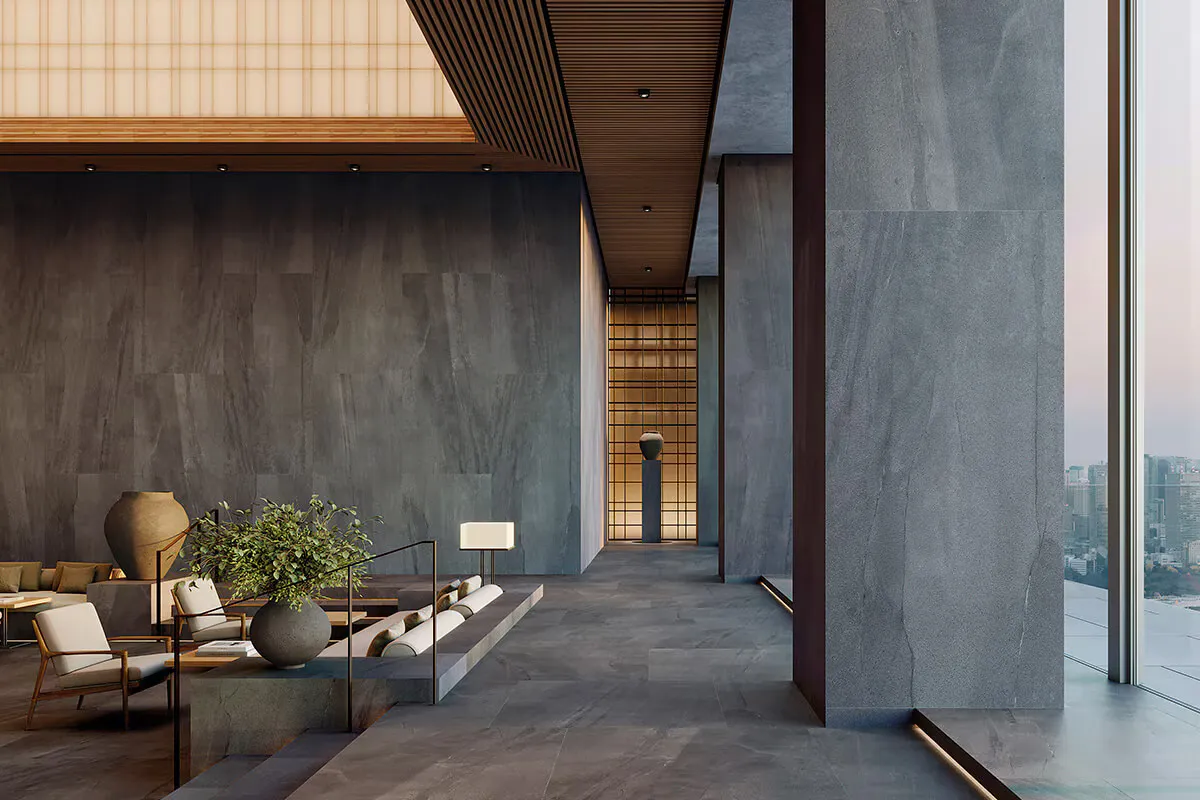
Aged Dark Nature 120×120 cm
Orientation and Room Size
One of the most important practical considerations in choosing between light and dark flooring is direct sunlight. Does the room in question face south? Are there a lot of window openings? Dark flooring is recommended for spaces with lots of natural light. The darker colour lends a more sophisticated aesthetic to bright spaces. In addition, the darker colour is more resistant to discolouration from direct sunlight.
Similarly, with a darker space that has little to no natural daylight, a lighter coloured flooring brings the room alive. The warm and cosy tones of pine and white oak are typical of Scandinavian homes, which counteract the long, dark winters. Light-coloured concrete-effect tiles provide a similar effect but in a more contemporary style. Lighter colours such as soft greys and honey coloured stone reflect any available light back into the space. And these tones tend to be more welcoming. This is especially true for darker kitchen spaces or basement areas. Remember that the flooring is one of the largest continuous surfaces in any room and significantly impacts the sensation of the space.
AC4 Ambient LS Austin 24.3×220 cm
Maintenance and Cleaning Regimes
We all lead busy lives, and the less time we spend cleaning, the better. The choice of light and dark flooring will also impact your cleaning regime. Lighter colours, such as light oak flooring, as a rule, tend to camouflage dirt and blemishes better. Even in hallways and areas with high traffic, such as kitchens, the lighter colour looks fresh and inviting.
Darker flooring, on the other hand, is less forgiving; any imperfections have an annoying habit of showing. Households with small children or pets are especially prone to maintenance issues. But it’s not the end of the world, sweep and vacuum more regularly, and clean spills immediately. And make sure to use cleaning products appropriate for hardwood floors.
Tip: A satin finish for a hardwood floor will help hide the typical wear and tear as well as the dents caused by daily use. In addition, we recommend recoating natural timber flooring every three or four years.
Linkfloor Chevron Brown 30.5×71.84 cm
Matching the Floor with Furniture and Décor
No floor exists in isolation; we think of flooring as an integral part of the room décor, which includes the furniture. For most of us, that means matching existing pieces of furniture to the flooring. In general terms, dark timber flooring provides a neutral backdrop that will complement any furniture, including timber elements. The only exception is when the timber furniture features an undertone that is the opposite of the floor colour. Timber, like anything else that has colour, can be divided into cool and warm undertones. Warm undertones include reddish, brown and pink hues, while cool undertones are in the blue end of the colour spectrum. Ideally, the furniture undertones should match the flooring undertones.
Lighter flooring, on the other hand, evokes a more minimalist aesthetic. The look favours delicate timber elements, metal and cane with brightly coloured textiles and soft furnishings. The aesthetic is coastal, where light and air are as important as the furnishings. Less is more. Light wood flooring and neutral tiles complement a sparser palette of accessories and furniture.
Different Types of Flooring
With all the recent advances in manufacturing technology, the options for light or dark flooring have never been more varied. Broadly speaking, we can divide flooring into natural timber, porcelain tiles and synthetic categories. There is a suitable colour and hue for every individual taste and budget. All of these varied materials come in light and dark options.
Porcelain Tiles
Porcelain is the ‘pièce de résistance’ of flooring materials. It is not only extremely hard and dense but is also waterproof and therefore resists the scratches and stains that come with daily use. Today porcelain tiles come in a variety of finishes that recreate the effect of stone, concrete and timber. That allows for a creative freedom in flooring that is unrivalled by any other material. And that includes everything from light to dark flooring with all the benefits of easy maintenance and low porosity.
Timber Flooring
The rich tones of timber run the gamut from light to dark flooring. In earlier times, the only option was solid timber planks sourced from local tree species. Nowadays, almost every imaginable species and hue is available to embellish our homes with the advent of engineered flooring and wood laminate.
- Solid Timber Flooring: Made from solid timber planks that are sanded and finished on site. The beauty of solid wood comes from the colour, the grain and the natural imperfections that make each plank unique. Additionally, the thickness of the material means that the floorboards can be refinished multiple times over their lifetime.
- Engineered: An improvement on the real thing. Engineered wood flooring consists of a number of plywood layers that have been sandwiched together. The top layer is nevertheless real hardwood and can measure anything between 3 and 6 mm. Much more affordable than solid timber, yet offering every colour variation imaginable. Engineered wood flooring is specifically suited to darker hardwoods.
- Parquet Flooring: Small individual pieces of timber are assembled in a geometric pattern. The wood can be solid or engineered timber. Nowadays, parquet flooring is pre-assembled; the most popular patterns include herringbone, chevron, basket weave, square-on-square or wood strip. Best suited to lighter natural tones, where the pattern can be more easily appreciated.
Laminate Flooring
Similar to engineered flooring, made up of several layers of synthetic materials (sometimes including natural wood) that are sandwiched together. A printed image that recreates the genuine look of real timber is protected by a transparent finished layer. On close examination, the laminate floor reflects its artificial composition but nevertheless provides unequalled creative freedom. Laminate flooring is affordable, but unlike engineered and solid flooring cannot be repaired if damaged. Dark grey laminate flooring in high-traffic areas like entrance halls and kitchens is recommended.
Luxury Vinyl Tile
The flooring revolution enters new territory with luxury vinyl tiles. LVT is made with multiple layers of PVC vinyl and can imitate the look of real wood or other materials. The advantages of a synthetic material include a wide spectrum of colours, including light grey floor tiles. As well as natural textures that reflect or absorb the light. Furthermore, LVT is 100% waterproof and offers more resistance to marks and scratches than laminate. These qualities make it specifically suited to kitchens and bathrooms with heavy traffic and condensation.
What Tone Flooring Suits your Décor Style?
The decision between light or dark flooring also helps reinforce the style of your home décor. Dark floors are more urban, hardwood and dark grey floor tiles guarantee a classic elegance that is timeless. These moody floors help create a cosy and introspective ambience in living rooms that is complemented by patterned wallpaper or rich paint colours. In bedrooms, the darker flooring is ideal for calming and relaxing environments that help foster all-important sleep. Similarly, an entrance hall with dark wooden flooring sets the tone for understated luxury beyond.
Lighter flooring, on the other hand, bounces the light around a space and adds a cheerful, optimistic flourish to kitchens and bedrooms. Pine floorboards and light oak flooring evoke a rustic charm that feels reassuringly traditional. Light grey flooring, on the other hand, adds a more contemporary twist.
If you prefer the loft style aesthetic, light or dark flooring can help warm or exaggerate the industrial look. Hard materials like metal or concrete effect floor tiles in darker shades look great in large open plan spaces. Softer, lighter flooring helps add a luminous glow to north-facing lofts with little natural light.
Combining Light and Dark Flooring
For most homes, it’s not a question of either or, but instead a combination of both light and dark flooring. The orientation of the windows and the configuration of the different spaces will help you decide which approach works best. However, even in open-plan living spaces, a combination of light and dark flooring helps to establish zones. The contrast in colour is perfect to differentiate a dining space that flows into the kitchen and living room, for example. The same goes for large bathrooms where light and dark flooring helps break up the space and adds visual interest.
In Summary
Through this article, we have explained how multiple factors are involved in the choice between light and dark flooring. We have proved that it’s not simply a question of preference but instead comes from empirical evidence. The following checklist provides a useful summary of the overall criteria involved.
- The dimensions of the room and how you want to perceive the space.
- How much foot traffic is there going to be
- The orientation and the number of windows providing natural daylight.
- Lifestyle and maintenance issues.
- Home décor and style preference for a classic or contemporary aesthetic.
- How the flooring works with your existing furnishings and upholstery.
- Light and dark flooring helps to zone large open-plan interiors.
- Budget considerations and the quality of the floor finishes.
Decision Time
Before making the final decision, we recommend further research by making an appointment at your nearest Porcelanosa showroom. You will see everything from dark wood flooring to light grey floor tiles, which the staff there will be happy to display. In the meantime, drop us a line with any questions regarding the content of this article.