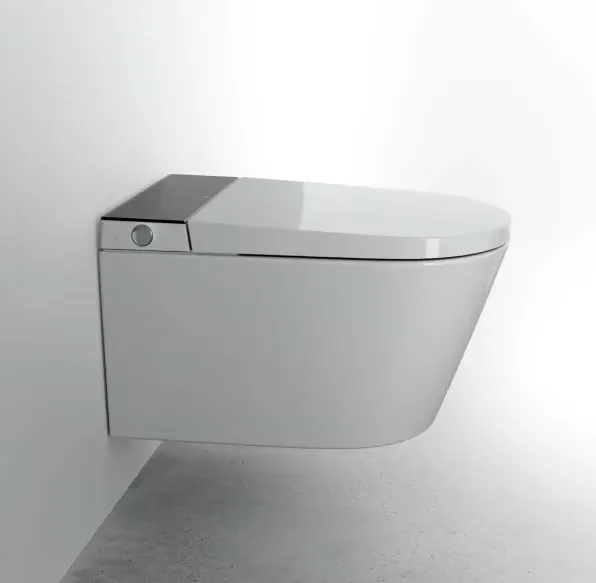
Smart Toilet: High Tech Engineering & Designer Looks
The smart toilet represents a new standard of hygiene and wellbeing within contemporary bathroom design. It was only a matter of time before technology caught up with the WC, and the advances are mind-blowing.
Since the traditional toilet pan was perfected towards the end of the 1800s, its design has remained practically unchanged. Until now. Back then, the water flush mechanism was combined with the S-trap and the mass manufacture of ceramic bowls. Now we have entered a new age of WC design that provides a superior standard of hygiene and convenience. The smart toilet is part of a new approach to bathroom design where wellbeing and physical health are paramount.
Through this article, we are going to advise you on the innovative aspects of smart toilets and their health benefits for you and your family. We’ll also be explaining the installation of smart toilets while illustrating remarkable models.
i-comfort Integra smart toilet
How smart toilets are transforming modern bathrooms
We are more aware today than ever before of how important clean hands are to our health. Especially after using the WC, and this is where the smart toilet comes into its own. In the new age of going to the toilet, there’s no need to use your hands at all.
However, that’s not the only innovative feature. The integrated cleansing adds another dimension to personal hygiene hitherto unknown. While several decades ago the bidet toilet was considered a gimmick of ungainly proportions, nowadays its design is sleek and sophisticated. Just like any new technology that foments a change of habits, the smart toilet represents a different way of experiencing the bathroom. Nevertheless, it’s one that is here to stay.
i-comfort Integra Round smart toilet
What is a Japanese toilet?
Sometimes referred to as a Japanese toilet, the smart toilet was first popularised in the Land of the Rising Sun. Like a lot of inventions that originated elsewhere, the Japanese are expert at perfecting technologies and bringing them to their ultimate expression. Traditionally, Japanese toilets were designed for the squatting position. After WWII, however, a cultural shift occurred. From the 1960s onwards, the Western-style sitting position toilet became ubiquitous. Subsequently, the Japanese applied their technical rigour to the WC by combining it with the Washjet. In other words, an amalgamation of the bidet and the WC pan. Since then, smart toilets have evolved even further, and the Japanese have exported the concept around the globe. The technology is now mainstream and represents an extension of our understanding of the bathroom as a space of holistic wellbeing.
What are the Standard Features of the Smart Toilet?
At its most basic, the smart toilet is a more sophisticated version of the traditional toilet, a toilet bowl with bidet spray. One that is designed to be more comfortable, more intuitive, more efficient and most importantly, more hygienic. Thanks to the application of electronics, plumbing and connectivity, we are entering a new era of health and wellbeing. The generic smart toilet will include all or some of the following features, with some models offering even more cutting-edge technological extras.
#01 Automated lid opening and closing
A series of sensors connect with the smart toilet in order to automatically open and close the toilet lid. Not only does this feature provide greater hygiene, but it is also suitable for Lifetime Housing. Users do not have to crouch down before and after using the WC.
#02 Bidet-style hygiene water jet
With the help of angled water jets, the smart toilet integrates the traditional bidet function. The smart toilet offers a customised cleansing experience where the angle of the jet, the water temperature and the pressure can be adjusted to suit. Furthermore, an air dryer facility practically eliminates the need for toilet paper, further reducing waste. The combination of water jet cleansing and drying ensures maximum hygiene.
#03 Water efficiency
Smart toilets go beyond the dual flush mechanism in their drive to save on water consumption. Thanks to the built-in sensors, the toilet can detect the exact quantity of water required to clean the bowl. And most importantly of all, the bidet function means that toilet paper is significantly reduced. Not only is this good for the planet, but it saves on household water bills as well.
#04 Heated toilet seat
Comfort is paramount in the era of the smart toilet. Temperature-controlled features replace traditional cold toilet seats. And depending on the model, the temperature can be adjusted to personal preferences for multiple users.
#05 Touchless flushing mechanisms
Manually operated flush mechanisms can spread germs and bacteria, especially in bathrooms used by multiple occupants. The touchless flush is controlled by built-in sensors that trigger the flush when necessary or via hand gestures. These hands-free control systems reduce germ transmission significantly.
#06 Self-cleaning mode
Some smart toilet models include self-cleaning features that include both physical and chemical components. Powerful water sprays and specially treated ceramic coatings help keep the pan clean. While integrated UV lights and automatic timed detergent dispensers help ensure these surfaces are sanitised.
Elimination of odours
The smart toilet represents a holistic approach to the bathroom environment. One of its most underrated features is the possibility of eliminating odours. This is once again one of the ways that these toilets positively affect the physical health of users. There are two main ways that smart toilets eliminate odours.
(a) Toilet models that filter the air quality use the same channels as the air-drying feature. A fan sucks the air out and passes it through a photo-catalytic or carbon filter, which breaks down the particles that cause bad odours.
(b) Alternatively, when the bowl is in use, a fan is automatically activated. The differential in pressure draws the odours out through the waste connection instead of releasing them back into the bathroom.
Users can further customise the smart toilet by adding deodorisers or air fresheners that release scent into the air.
Smart Toilet Connectivity
Remote control opening and closing seat mechanisms are not the only way that smart toilets are connected. Increasingly, they are becoming an extension of the Internet of Things (IoT). Wireless technology and sensors provide useful data to optimise both health monitoring and water usage. Practical feedback is provided on toilet cleaning, leak detection and in some cases even health conditions such as diabetes. The future of smart toilets will provide ever more information, making them a valuable tool in personalised wellbeing regimes.
Smart Toilet Design and Style Options
Just like a standard toilet, you need to measure your bathroom and choose a model that fits comfortably within the confines of the space. The most important dimension is the clear space in front of the toilet pan that allows easy access to manoeuvre. The recommended clearance is 76 cm, while the minimum for an ensuite or powder room with limited space is 60 cm.
The smart toilet is not only highly practical, but nowadays it’s sleek and elegant. The sinuous designs of contemporary smart toilets will look at home in any style of bathroom décor. Gone are the days when the original Japanese toilets appeared to look cumbersome with add-ons that were difficult to clean. The silhouette of the modern-day smart toilet is indistinguishable from other contemporary WC fittings.
#01 Wall-mounted vs. back-to-wall models
Just like traditional models, smart toilets are either a concealed toilet cistern or supported directly off the bathroom floor. Both options offer different advantages; however, one or the other might be more suitable for individual bathrooms.
#02 Smart toilet seat vs. complete smart toilet bowl
For an instant smart toilet installation, you can simply replace the standard toilet seat with a smart toilet seat. Almost all of the functions offered by the smart toilet bowl can be added, but the result is bulkier and less streamlined than the integrated model.
Technology, Design & Comfort
The following range of I-Smart toilet models by Noken may look futuristic, but they are revolutionising bathroom routines right now. The slimline design hides a myriad of high-tech engineering that is setting the gold standard in smart toilet design. These represent a new understanding of luxury in bathrooms based on user experience.
Classic back-to-wall slim profile aesthetic
Custom temperature control water jets. Adjustable nozzle. Post-cleansing air drying system. Integrated LED light for safer night-time use. Incorporates Noken Clean Tornado, providing efficient self-cleaning flushing on both sides of the pan symmetrically. Remote control for raising and lowering the toilet seat. Descaling feature for hard water regions. Handless seat opening and closing via foot sensor. Inbuilt plasma sterilisation of bacteria.
Compact design with an internal cistern within the bowl
Automatic self-control distinguishing between rear (male) and front (female) washing. Custom massage water-jet systems. Five air drying settings. Integrated odour extraction and return clean air filter. Night light. Custom seat heating facility. Remote control for raising and lowering the toilet seat. Descaling feature for hard water regions. Noken Clean Tornado self-cleaning with high-pressure vortex discharge. Photocatalytic arch odour removal and air filter. Handless seat opening and closing via foot sensor. Inbuilt plasma sterilisation of bacteria.
Wall-hung concealed cistern system
Automatic self-control distinguishing between rear (male) and front (female) washing. Custom massage water-jet systems. Five air drying settings. Integrated odour extraction and return clean air filter. Night light. Custom seat heating facility. Remote control for raising and lowering the toilet seat. Descaling feature for hard water regions. Noken Clean Tornado self-cleaning with high-pressure vortex discharge. Photocatalytic arch odour removal and air filter. Handless seat opening and closing via foot sensor. Inbuilt plasma sterilisation of bacteria.
Smart Toilet Installation Guide
If you are planning to replace your standard WC with a smart toilet, you will need to have an electrical connection. Electrical outlets in bathrooms are tricky and should always be supervised by a professional. Nevertheless, the fitting of the back-to-wall smart toilet pan like the i-Comfort Integra is relatively straightforward, suitable for a DIY enthusiast. Similarly, the instructions for fitting a smart toilet seat to a traditional bowl are self-explanatory. Concealed cisterns, on the other hand, require some specialist building work.
Choosing the Best Smart Toilet for your Home
The main advantages of choosing a smart toilet are invisible to the naked eye. However, its impact on personal hygiene and environmental comfort is difficult to exaggerate. From eliminating bathroom odours to cutting down on toilet paper waste, the smart toilet packs a powerful punch. It’s a great way to upgrade your bathroom in a significant way without complicated building works. Notwithstanding, you will need to choose a suitable model for your bathroom layout.
#01 The rounded profile and sophisticated design of the smart toilet add a contemporary aesthetic to family bathrooms or en-suites. The wall-hung models are ideal for smaller bathrooms because they generate a sensation of uninterrupted space. Meanwhile, the floor-mounted model provides a robust fitting in family bathrooms that belies its advanced built-in features.
#02 You might not need all the add-on features offered by smart toilets right now. But increasingly, homeowners are future-proofing their houses to conform to lifetime housing standards. Before choosing a model, make a note of what your present requirements are now and what they are likely to be going forward.
#03 Smart toilets are more sustainable. As we move into the future, consumers understand that what’s good for the planet is good for them. The flush mechanism is more precisely controlled than traditional models, and reduced toilet paper consumption conserves forestry.
#04 From the latest technology behind the shape of the toilet bowl to self-cleaning toilet features like powerful spray jets, smart toilets save on cleaning and ongoing maintenance.
#05 Whatever your preference in design, make sure to select a model with both front and rear cleansing modes. It should also include adjustable spray temperature and pressure settings.
Much More than a Toilet with Bidet
Like many new inventions that gain widespread acceptance, the smart toilet is practical and intuitive. One which combines several functions within a single artefact. Furthermore, it could be said that the smart toilet is a symbol of our time. It represents our interest in hygiene and well-being as well as our concern for the planet. It brings the digital and physical world together into a practical expression of progress.
Make an appointment to visit your nearest Porcelanosa showroom to learn more about the futuristic technology behind smart toilets. Expert professionals will advise you on the options available to suit your home. In the meantime, just drop us a line with any queries relating to the content of this post.