
A vertical garden is one of the most impactful and versatile elements used in the design of spaces. Living murals to integrate nature into our daily environments, both indoors and outdoors.
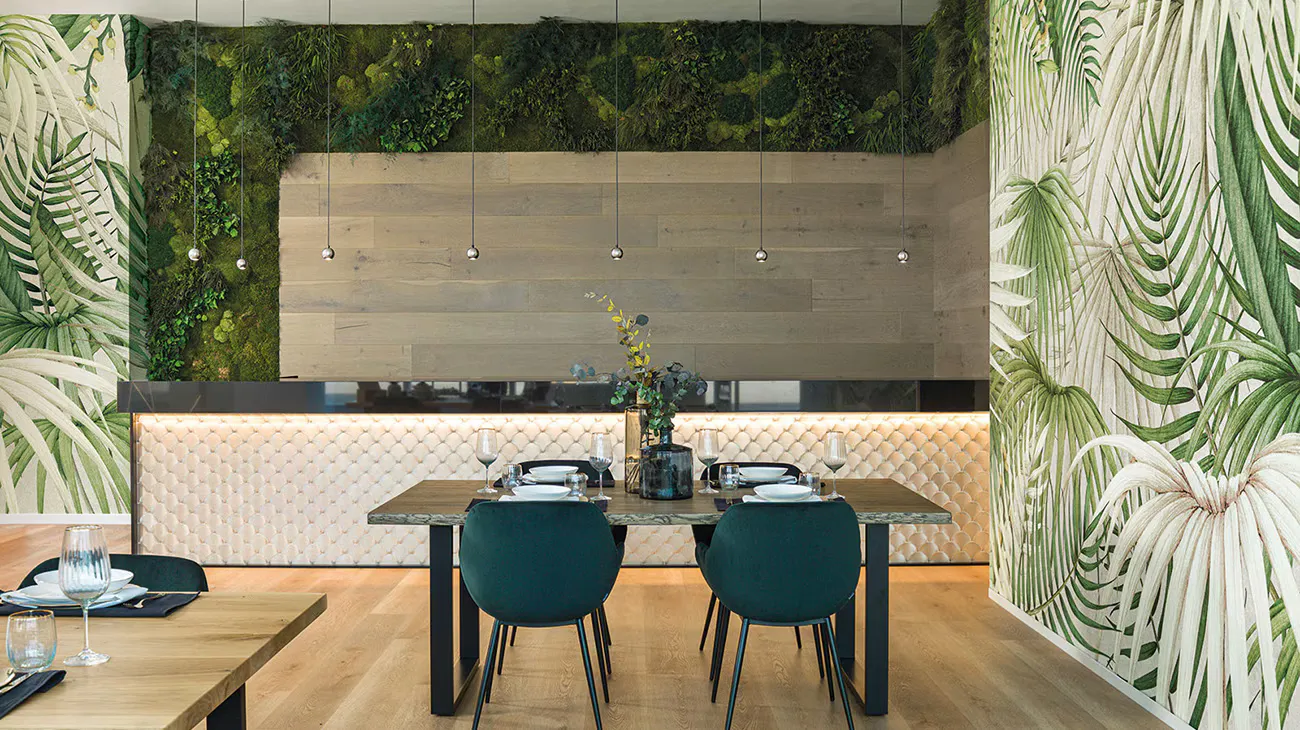
A vertical garden is one of the most impactful and versatile elements used in the design of spaces. Living murals to integrate nature into our daily environments, both indoors and outdoors.
As part of the biophilic design, the vertical garden can add an esthetic touch to the structure in which it is installed. They also have environmental and health benefits. Pieces that can completely transform the appearance of a room, the possibilities of which we will be exploring in the next post.

A vertical garden installed in a Noken bathroom.
A vertical garden is a composition that incorporates plants and vegetation on the wall, rather than on the ground. These facilities are designed to take advantage of the space of walls, façades or structures, transforming flat surfaces into living areas that are esthetically attractive.

Photos: Javier Muñoz. See the full project on the website.
Structure installed in the offices of Agora Construcciones on the Liston Oxford Cognac and Verbier Silver ceramic tiles by Porcelanosa.
There are different types and their design may vary depending on the environment, purpose and decorative preferences. Some vertical gardens are made up of special bags or panels that contain earth and allow plants to grow. Others use hydroponic or aeroponic systems, where vegetation obtains nutrients without the need for soil. In addition, elements such as automated irrigation systems, integrated lighting and monitoring technology can be incorporated to optimize growth and maintenance.
These structures can combine ornamental plants, herbs, flowers or even vegetables. Its layout depends on the design intention and the environment in which it is located.
A vertical garden offers a unique esthetic that can turn any space into a captivating visual experience.
Similarly, the design with vertical gardens is not limited to a single style. They can adapt to a wide variety of architectural movements, from minimalist to extravagant. They are also installed in both offices and homes or commercial premises, and have proven to be an innovative solution for integrating nature into urban environments.

Vertical garden on XTONE Calacatta Green Silk.
Green walls act as natural filters, improving the air quality by absorbing carbon dioxide and releasing oxygen. They also provide a habitat for beneficial insects and birds, thus contributing to the preservation of biodiversity in urban areas. Integrating sustainability into interior and exterior design is currently essential, and vertical gardens offer an elegant and effective solution to achieve it.
The choice of how to combine a vertical garden will depend on the environment, the purpose of the space and the esthetic preferences. These are some ideas for effectively merging these structures:


Vertical garden set against Alluslate Calacatta Viola Mate by Krion.
(1) Vertical garden on Monarch María natural wood by L’Antic Colonial. (2) Composition installed at the Porcelanosa store in Valencia. (3) Vertical garden at the Upper Sarrià offices installed on Bottega Caliza ceramic tiles by Porcelanosa. (4) Vertical garden proposal for Butech façade made with Krion®.
The choice of how to combine a vertical garden will depend on the environment, the purpose of the space and the esthetic preferences. These are some ideas for effectively merging these structures:
A vertical artificial garden is an alternative to enjoy the beauty of vegetation without the need for intensive care or the limitations of natural light. With increasingly sophisticated and realistic designs, these are some aspects to take into account:
Artificial vertical gardens offer numerous advantages. However, many professionals prefer the authenticity and environmental benefits of natural vertical gardens. The choice between one or the other will depend on personal preferences, specific needs and the environment in which the structure is proposed.
In addition to an esthetic declaration, a vertical garden is a manifestation of our commitment to sustainability and well-being. These elements, with their ability to build atmospheres and improve quality of life, have become an essential tool for contemporary architects and interior designers.

Vertical garden on XTONE Glem white Nature.
An example of this transformative power is found in the showroom that Ramón Esteve has created for Porcelanosa. A biophilic design consisting of open-plan rooms that connect with each other using neutral tones and areas with vegetation full of natural light.
In short, we are moving towards a future where architecture and the environment coexist harmoniously. In this regard, the vertical garden is connected to the earth. A reminder that even in urban environments, nature can flourish at new heights.